










Solutions
Explore how to grow
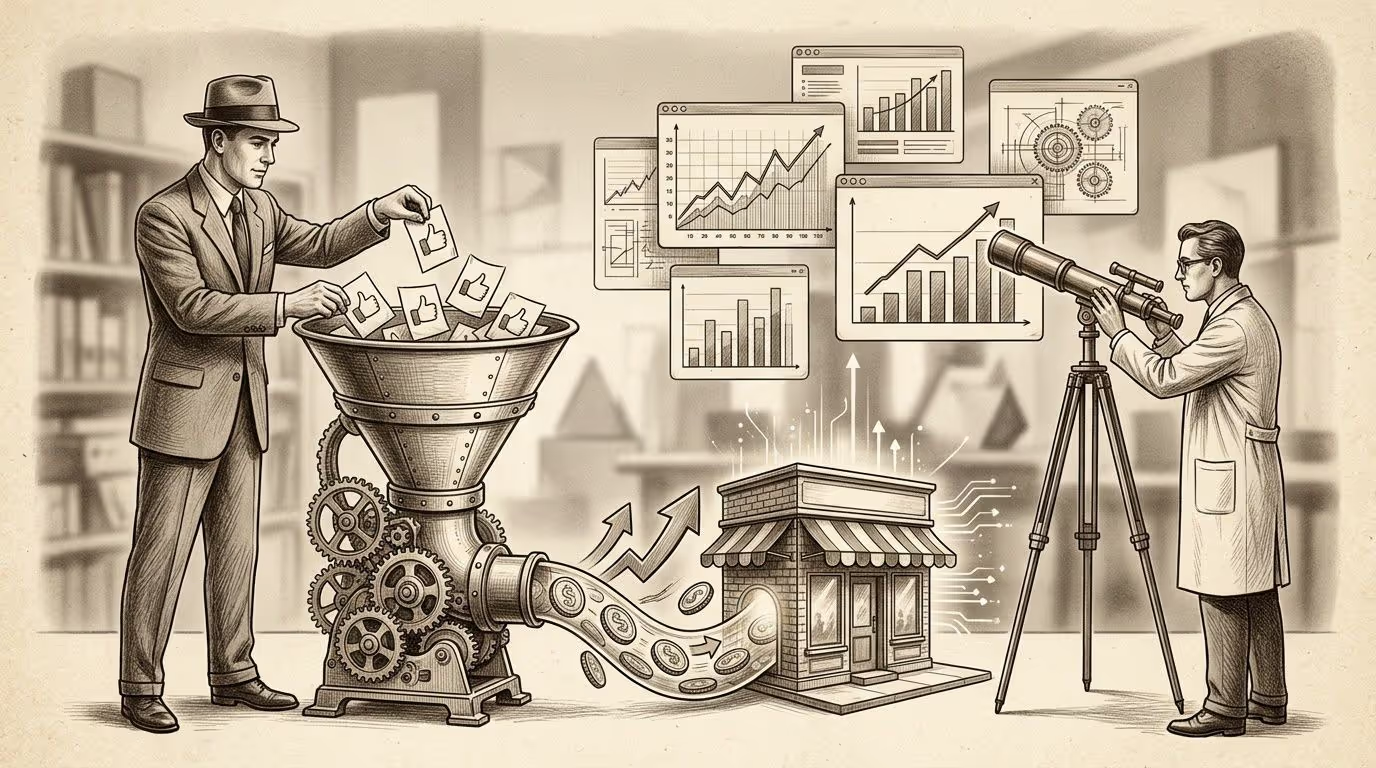
A Facebook fan page is no longer just a social storefront. For a business leader, it's a strategic asset that, when properly integrated, works as a key piece of the conversion system. Its true value lies not in the number of "likes" it gathers, but in its ability to attract qualified traffic, nurture prospects, and feed directly into business goals.
At Bigbuda, we can help you with social media management.
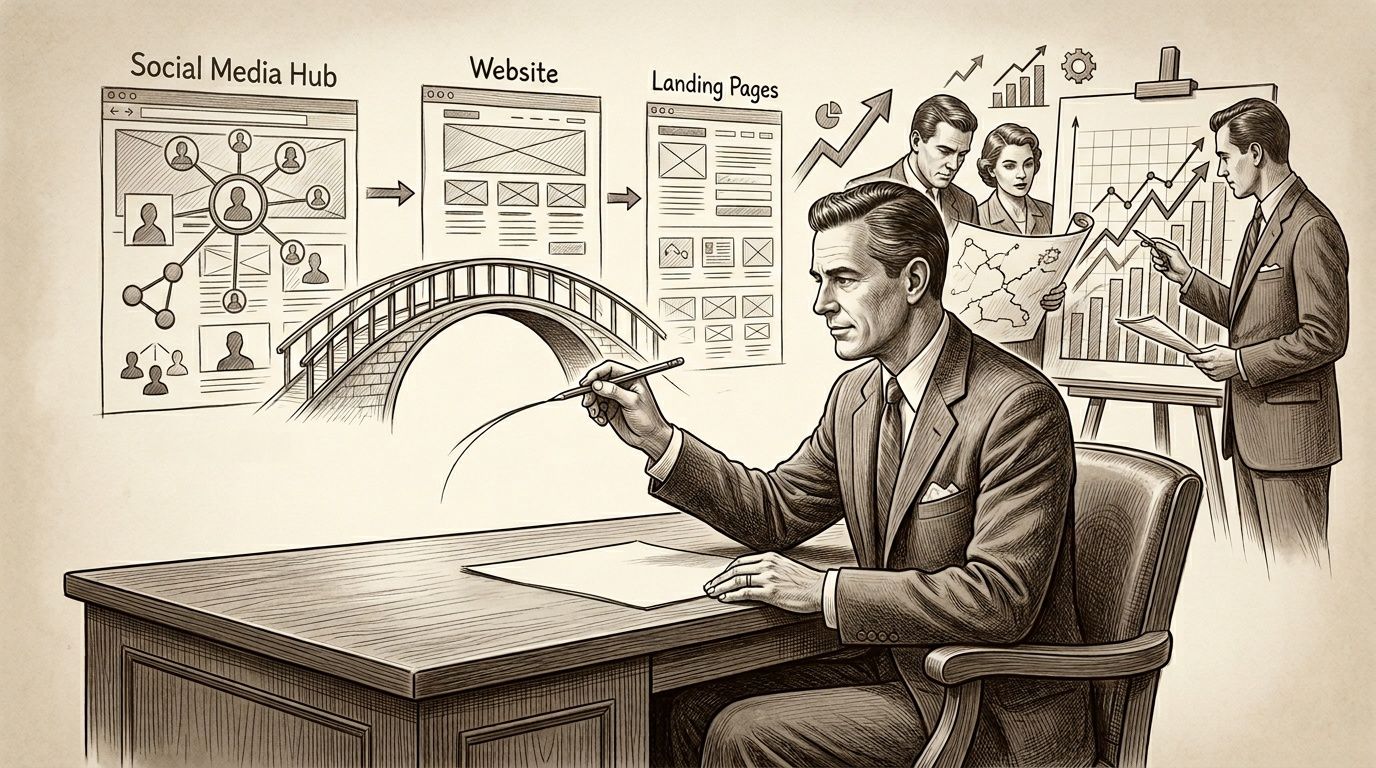
The era of collecting "likes" as trophies is over. The real value of a Facebook fan page is measured by its contribution to business growth, not by vanity metrics. The right strategic approach isn't about optimizing isolated elements within the platform, but about building solid bridges from the page toward your core conversion assets: your website, your landing pages, or your ecommerce store.
This shift in mindset is fundamental. Instead of entertaining a captive audience on Facebook, the goal is to use the platform to achieve concrete business results.
The goal is to turn the fan page into a growth engine with a clear purpose, focused on:
This integrated approach turns the page from a content cost centre into an asset with measurable ROI. Every post and every call to action should guide the user along their journey toward purchase.
A fan page's true performance is measured not by the interaction it generates, but by the action it prompts off the platform. Optimization should focus on connecting the channel with the conversion system, not on confining the user.
The first step is to abandon the obsession with virality and embrace relevance. Content that tackles business decisions, common mistakes, or practical insights generates genuine interest that precedes conversion. This type of material positions the brand as an authority and qualifies prospects before they engage with the sales team or the ecommerce store. If you want to dig deeper into how to measure these valuable interactions, we recommend reading our article on what engagement is and its real impact on business.
A fan page optimized for conversion not only reduces acquisition costs by better qualifying the audience, but also maximizes the return on social media investment, turning it into a predictable and scalable asset.
Many companies start their fan page by focusing on visual elements, such as the cover photo. However, before any tactical action, you need a strategic compass, especially in a market as connected as Chile's.
Success isn't measured in likes, but in real connection. To achieve it, you need a solid value proposition that answers one fundamental question: what concrete problem do you solve for your ideal customer in Chile? It's crucial to understand their pain points, aspirations, and to speak their language.
To connect, you need to understand the terrain. In Chile, the Facebook ecosystem is still a giant. As of February 2026, we're talking about 20,005,300 active users.
The most telling demographic data point is that the dominant age group, with around 35% of users, is the 35-to-44 bracket. This is a key strategic clue, especially for B2B businesses or those targeting an audience with greater purchasing power. To go deeper, NapoleonCat's data on social media use in Chile is an excellent starting point.
With this information, your content strategy should be adjusted:
Your fan page is not a catalogue. It's the stage where you prove you understand your customer better than anyone. Every piece of content should answer the question the user is silently asking: "And what's in this for me?"
With your value proposition and audience clearly defined, visual and message consistency is the next step. A professional image and a consistent message signal to users that they're in the right place, setting the stage for them to take the next step: clicking, downloading a resource, or, ultimately, buying.
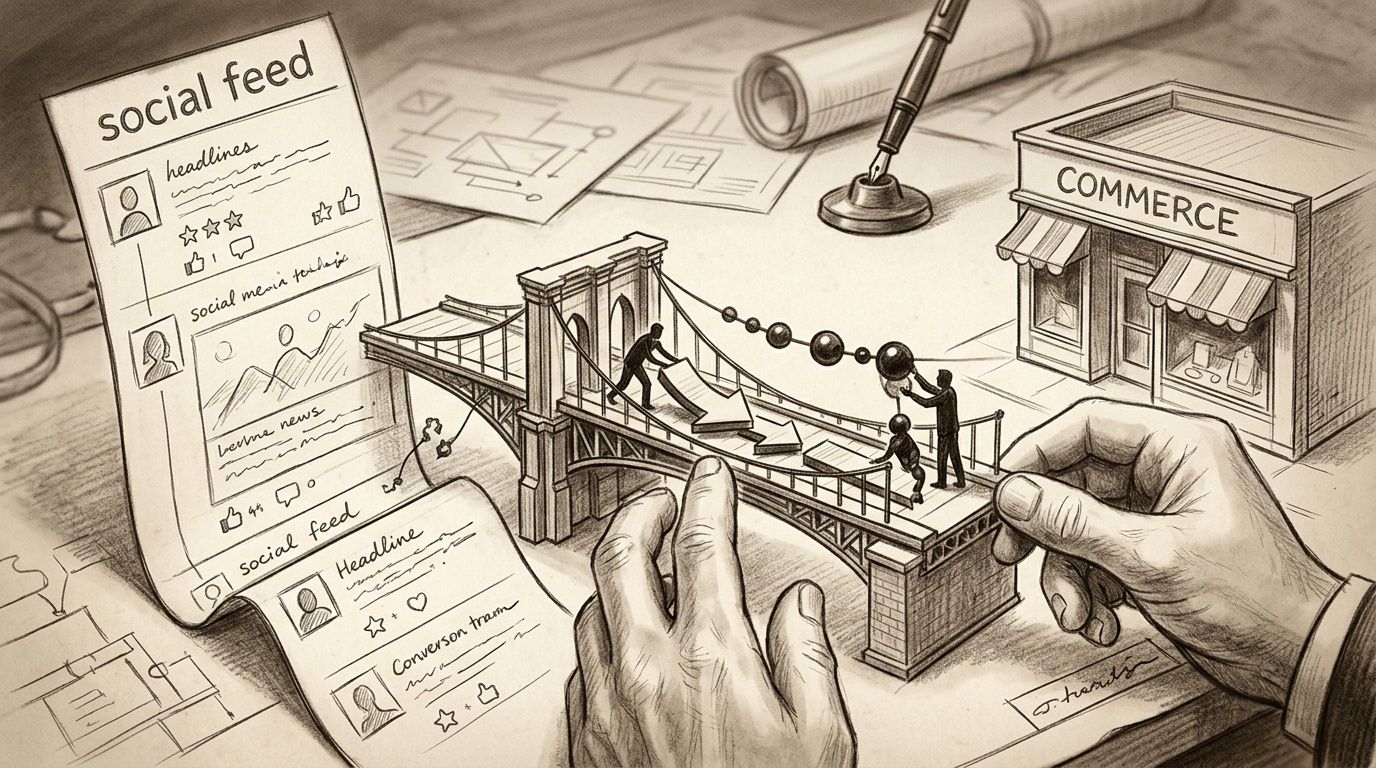
The true performance of your Facebook fan page is measured by what happens after the user clicks and leaves the platform. It's essential to think of the page as a bridge, not as the final destination. Every element, from the profile photo to the latest post, should help the user cross over to your conversion assets, whether that's your ecommerce store on Shopify, your site on Webflow, or a specific landing page.
The page profile is the first opportunity to guide visitors. Every field is a chance to insert a call to action (CTA) aligned with your business goals.
Consider these points:
By optimizing these elements, your profile stops being a simple summary and becomes a control panel that generates qualified traffic toward your assets.
Building bridges is pointless if you can't measure who crosses them and what they do when they arrive. This is where the Meta Pixel becomes indispensable. If you have a website, a store on WooCommerce, or you use platforms like WordPress, having the Pixel correctly installed is a fundamental requirement, not an option.
The Pixel lets you track users' actions once they leave Facebook. Without it, you're operating blind.
Optimizing without measuring is guessing. The Meta Pixel is the translator that turns user behaviour into business data, allowing you to understand the real ROI of every effort on Facebook.
With the Pixel active, you can find out how many users who saw a post ended up adding a product to their cart or completing a form. This information lets you identify which content not only generates engagement, but also drives business. Learning to design a landing page for campaigns that actually converts is the perfect complement to this redirection strategy.
The mindset should be that of a digital architect: building solid bridges from your Facebook fan page and installing the sensors (the Pixel) to measure the flow and quality of the traffic that passes through them. That's how you stop managing a social page and start operating a conversion asset.
Many brands burn through budget chasing virality on their Facebook fan page. However, the most effective content isn't the most creative, but the kind that solves a real problem for the target audience. It's time to leave behind the idea that creativity alone generates business and to focus on being useful.
The posts that really work are those that address common mistakes, simplify complex decisions, or share practical insights. Your content should rest on three fundamental pillars.
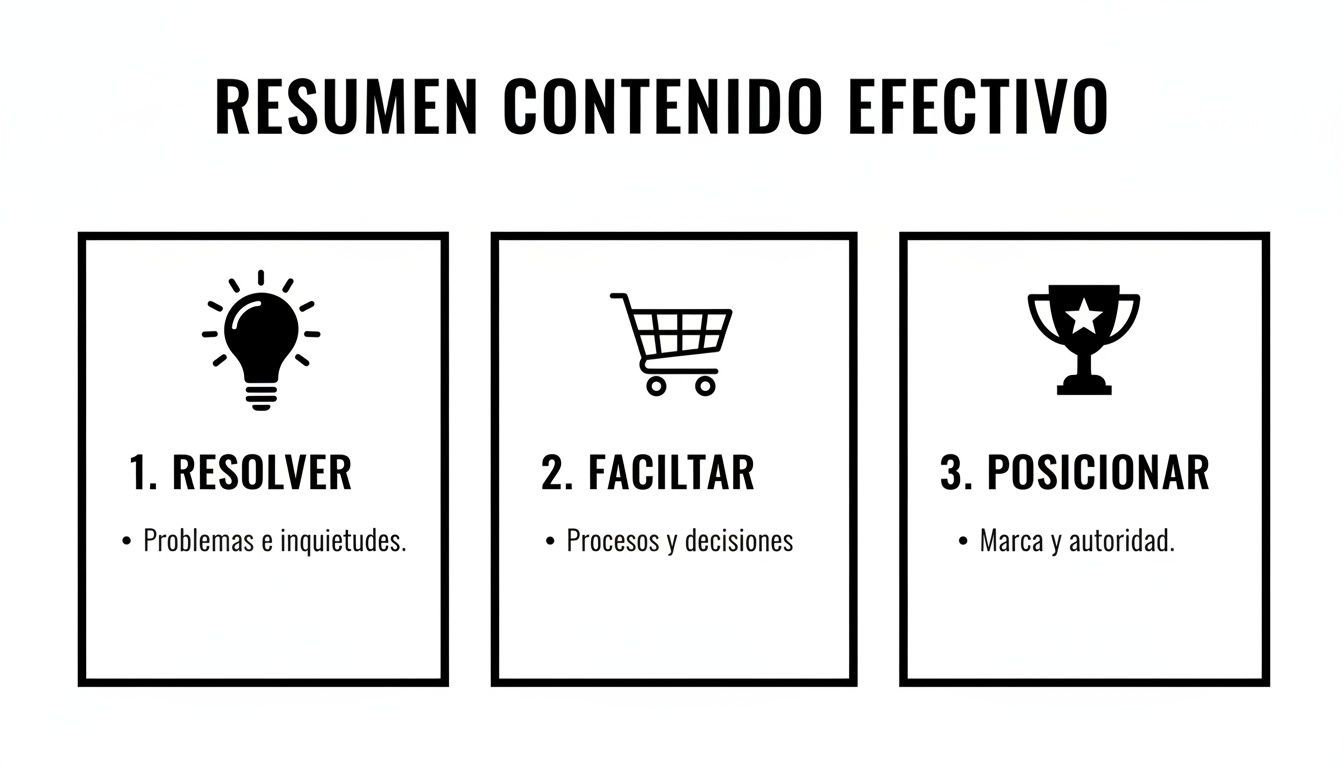
Content that converts seeks to solve, simplify, and position the brand as a trusted authority, not just to entertain.
A post titled "The 3 mistakes that cost businesses in your sector money" will generate far more qualified interest than the latest trending meme, because it connects directly with a business concern. This type of content isn't designed to be massive, but to spark valuable conversations that draw the right user into your funnel.
The goal is to swap the monologue of "look how creative I am" for the dialogue of "look how I can help you."
Formats that work well with this strategic approach:
The best content doesn't seek everyone's attention, but the genuine interest of the right people. Its purpose is to filter the audience so that only the prospects with the greatest potential reach conversion.
This strategy is especially powerful in Chile, where 82.1% of Facebook users log in daily. Although the platform has lost ground in some niches, it remains a pillar of any conversion strategy. The average user spends 3.5 hours a day on social media, which creates a window of opportunity to nurture prospects with relevant content. You can review the full analysis of social media use in Chile for 2025 for more context.
This way, your Facebook fan page becomes a powerful prospect filter, delivering leads who are better educated and more ready to convert.
Relying on plugins to "boost" a fan page is a tactical mistake. True growth capacity doesn't come from tools, but from the ability to measure, interpret data, and optimize based on business results. Technology is only the means.
The goal is to move from chasing popularity to generating profitability. To do that, you need a system that connects your Facebook fan page's activity with key business indicators (KPIs).
The first step is to redefine success. Likes, reach, and comments are surface-level metrics. The real value lies in the actions users take after they click.
A high CTR on a Facebook ad is irrelevant if 100% of those visitors leave your site in under 3 seconds. The key metric isn't the click, but the quality and behaviour of that traffic.
To measure this, it's crucial to connect Facebook data with your website through the Meta Pixel. Configuring it correctly, ideally managed with tools like Google Tag Manager, is non-negotiable.
Once the Pixel and your analytics platform (such as Google Analytics 4) are synced, you can answer strategic questions:
Instead of drowning in data, focus on a simple measurement cycle. Define a concrete business goal (e.g., "generate 20 qualified leads per month") and align your metrics to evaluate it.
It's time to report what impacts profitability, not what inflates the ego.
Vanity metricWhy it's misleadingEquivalent business metricHow to measure itPage "likes"Doesn't indicate purchase intent or real commitment. It's a popularity indicator.Customer Acquisition Cost (CAC)(Facebook investment / New customers attributed to Facebook). Requires Pixel and CRM.Post reachOnly indicates how many people saw your post, not whether they were interested or took action.Conversion rate per visit (CVR)(Site conversions / Sessions from Facebook) x 100. Measured in Google Analytics.Interactions (comments)They can be positive or negative, but they don't guarantee commercial interest.Lead-to-customer conversion rate(Closed customers / Leads generated from Facebook) x 100. Measured in your CRM.Link clicks (CTR)A click isn't a conversion. The user may leave the page immediately.Traffic quality (Sessions > 30s)Filter sessions in Google Analytics by source (Facebook) and session duration.
Adopting this approach lets you make decisions based on profitability data and justify the investment in your Facebook fan page as a channel that contributes directly to business growth.

Given the popularity of platforms like Instagram and TikTok, many marketing leaders wonder whether a Facebook fan page is still relevant. The question is framed wrong. It's not about choosing between Facebook or TikTok, but about understanding how each channel fits into the business's overall conversion system.
Facebook remains a strategic pillar for performance marketing. The platform continually reinvents itself with AI in its algorithms and new formats, holding its place as a valuable asset.
A fan page operating in isolation is a stagnant asset. Its true potential is unlocked by integrating it with other channels, creating a robust and sustainable growth cycle.
Consider these strategic synergies:
The fan page is no longer the centre of the marketing universe. It's a key planet within an orchestrated galaxy, whose function is to capture, nurture, and transfer audiences between the brand's various touchpoints.
In Chile, fan pages remain remarkably effective for performance marketing. With a potential advertising audience of 13.1 million people (65.6% of the total population), ignoring this channel is a risky decision. You can dig deeper into these figures in the latest report on social media use in Chile.
The challenge is to manage the Facebook fan page as a strategic asset within a larger system. By combining it with SEO and email marketing strategies, you not only diversify your traffic sources but also build a growth engine that's more resilient to changes in algorithms and the market.
At Bigbuda, we don't build pages, we build conversion systems. If your fan page feels like a dead end, it's time to integrate it into a strategy that delivers measurable results. Discover how our approach to CRO and digital marketing can transform your online presence.
Yes, when it is treated as a bridge rather than a destination. In Chile the platform remains a giant, with a potential advertising audience of 13.1 million people, 65.6% of the total population. Ignoring that channel is a risky decision, provided the page is connected to your real conversion assets.
As of February 2026 there are 20,005,300 active users in Chile, and the dominant age group, with around 35% of users, is the 35-to-44 bracket. That is a key clue for B2B businesses or those addressing an audience with greater purchasing power, which values experience, trust and efficient solutions over viral trends.
Treat every field as a call to action. Use the website link for active campaigns, promotions or launches instead of a generic URL. Reinforce the value proposition in the short description with a trackable shortened link, and set the main action button so it takes the user straight to where they can act, without friction.
Building bridges is pointless if you cannot measure who crosses them. The Pixel tracks what users do once they leave Facebook, so you can see how many who saw a post added a product to the cart or completed a form. Without it you operate blind, and optimising without measuring is guessing.
Report what impacts profitability. Swap page likes for customer acquisition cost, post reach for conversion rate per visit, comments for lead-to-customer conversion rate, and CTR for traffic quality measured as sessions over 30 seconds. This requires the Pixel, your analytics platform and, ideally, CRM integration.
Not the most creative, but the kind that solves a real problem. Analysis of common mistakes, decision-making guides and practical insights generate qualified interest because they connect with a business concern. The goal is to filter the audience so only prospects with the greatest potential reach conversion.