










Solutions
Explore how to grow

Your team has already tried Google Ads. There are clicks, there's spend, there are reports. But the sense of control doesn't appear. ROAS rises one month and falls the next. The agency talks about campaigns, keywords and bids. You need answers about growth, margin and predictability.
That's the most common mistake. Many companies hire a google ads agency as if they were buying operations. In reality, they're choosing a layer of commercial intelligence. If that partner only manages ads, you're going to buy traffic. If it understands business, conversion and digital performance, you're going to buy learning, efficiency and growth.
In Chile, that decision matters more than before. The market has professionalized, the competition is more aggressive and post-click waste is still enormous. Choosing well isn't a procurement task. It's a strategic decision for the CEO, the marketing director or the eCommerce lead.
The initial filter is usually poor. People compare fee, certifications, team size and some ROAS promise. That isn't enough. A high-impact agency isn't defined by how much it posts on LinkedIn or how many dashboards it shows in a meeting. It's defined by its ability to connect advertising investment with business decisions.
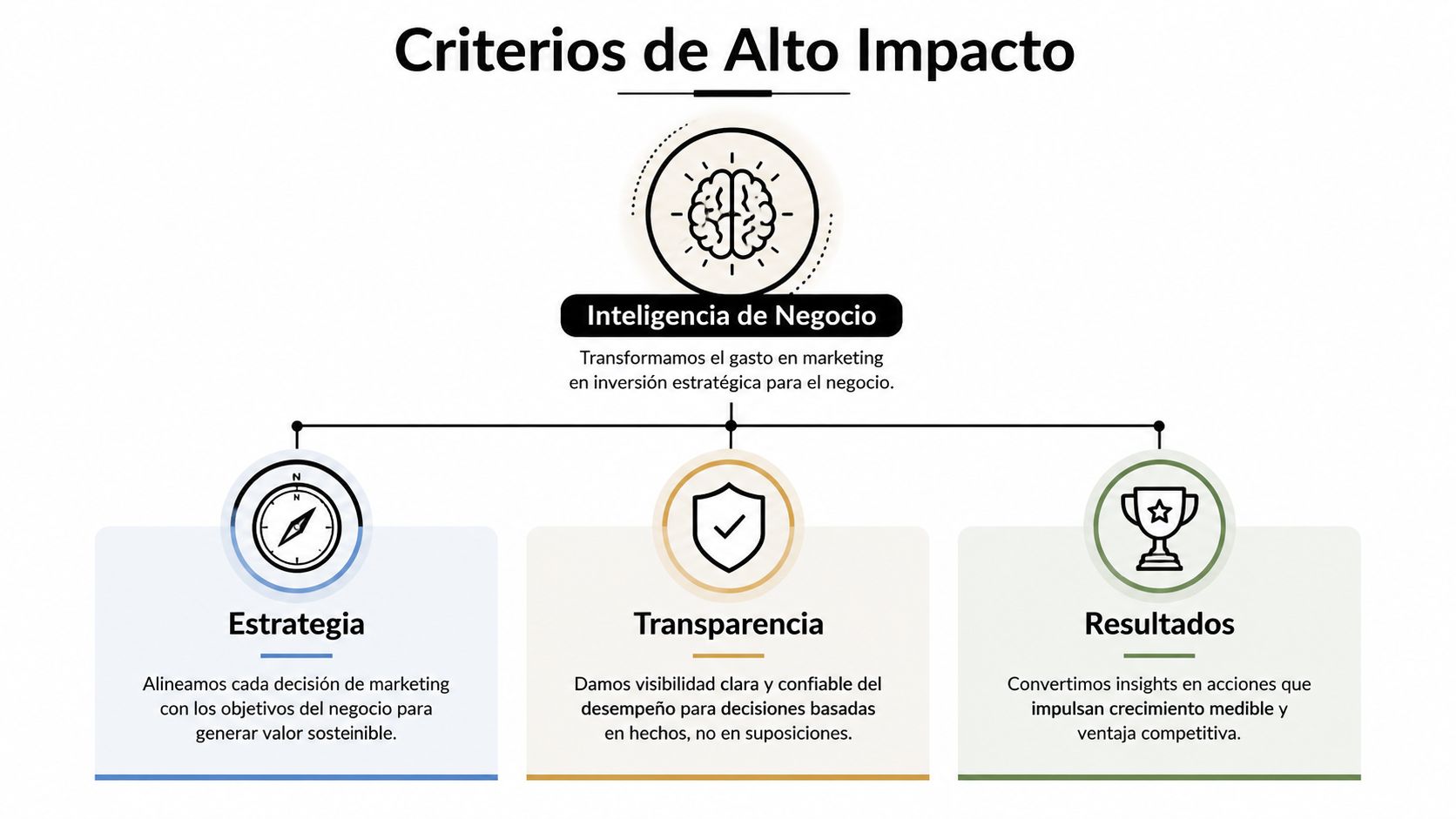
The first sign of maturity is simple. The agency talks about your commercial model before talking about campaigns. It asks about margin, recurrence, seasonality, product mix, close rate and site bottlenecks. If it starts by showing account structure without understanding how your company makes money, it's off track.
The second sign is methodological. The expert agencies in Latin America that operate with a scientific approach work in three phases: analysis of the local environment, strategic development with KPIs adjusted to the regional buying cycle and continuous optimization. That approach has shown ROI improvements of 2.5x to 3.5x in the first 90 days, especially when combined with user experience on the landing pages, according to Viva Conversion's analysis on Google Ads agencies.
Rule of thumb: if an agency can't explain how it formulates hypotheses, prioritizes experiments and learns from each cycle, it isn't managing growth. It's buying media.
Most agencies compete on the same terrain. Setting up campaigns, adjusting budget, writing ads and reviewing search terms. That no longer differentiates. The real value appears when the partner understands what happens after the click.
In eCommerce, for example, experience on platforms like Shopify or WooCommerce changes the conversation. In B2B businesses, the same happens with Webflow or WordPress when the site depends on speed, forms and more complex journeys. Not because the platform works magic, but because it conditions conversion, measurement and iteration speed.
A solid partner also works with first-party data, organized tagging, intent reading and business signals. If you want a reference for that broader approach, review how a comprehensive view of growth-oriented digital marketing is articulated.
Use these criteria and cut quickly if they don't appear in the conversation:
A good agency doesn't sell you optimism. It gives you a system to make better decisions with less waste.
Most meetings with agencies are poorly framed. The agency presents. The client listens. Then come generic promises and proposals that look alike. If you want to choose well, you have to direct the conversation like a strategic evaluation, not like a sales demo.
Don't ask "which services do you include?" Ask how they make decisions when performance drops, how they distinguish a traffic problem from a conversion one and what they do when the data contradicts the client's intuition. That's where the real level shows.
A valuable agency answers with judgment. It talks about prioritization, hypotheses, sequence of intervention and how it connects campaign signals with site decisions. A weak agency takes refuge in abstract language, unnecessary jargon or phrases like "it depends on the algorithm."
Evaluation Area / Key Question / What to Look for in the Answer. Diagnosis / What would they review first if ROAS drops in a sustained way? / A logical order of analysis. Not just campaigns, but also offer, measurement, traffic quality and post-click experience. Business / How do they connect the Ads strategy with real margin and profitability? / That they talk about quality revenue, commercial mix and decision-making, not just conversion volume. Experimentation / How do they structure tests and how do they decide what to prioritize? / Method, impact criteria and cumulative learning. Measurement / What do they need to trust the data before scaling investment? / Rigor in tracking, event consistency and critical reading of attribution. Collaboration / How do they work with internal eCommerce, sales or technology teams? / The ability to coordinate and not a silo logic. Reporting / What decisions should I be able to make with their monthly report? / That the report serves to act, not just to inform. Risks / What things could stall results even if the campaigns are well managed? / Honesty. They should mention site friction, pricing, value proposition or commercial processes.
There are answers that sound good and are still a bad sign. "We optimize constantly" means nothing if they don't explain what they optimize and why. "We're data driven" doesn't help either if they don't translate the data into business decisions.
Look for three things in each answer:
The best meeting isn't the one that ends with enthusiasm. It's the one that leaves you clear about how that agency thinks under pressure.
Many problems don't originate in Google Ads. They originate in the management of the partnership. That's why it's worth asking uncomfortable questions from the start.
If the agency avoids answering clearly, oversimplifies or tries to close the sale without going deeper, it has already shown you what operating with them will be like. Don't ignore that signal.
A poorly designed contract creates inevitable conflicts. The agency celebrates CTR. The client demands sales. The internal team complains about response speed. Nobody is aligned because nobody defined success precisely.
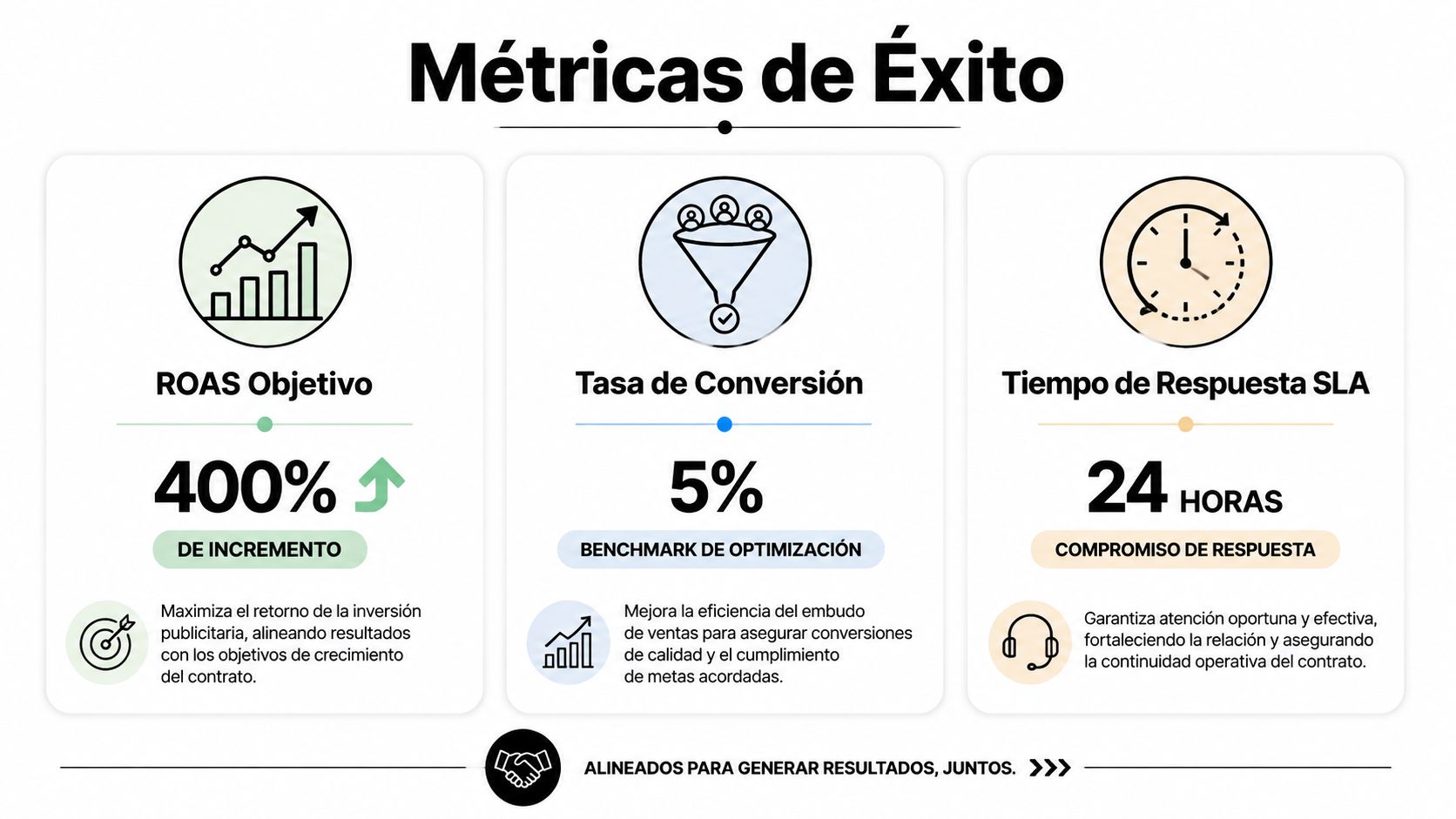
CTR and CPC are diagnostic metrics. They aren't general-direction metrics. They serve to understand tactical efficiency, but not to evaluate whether the investment is creating value.
In Chile, campaigns managed by certified agencies achieved an average CTR of 5.2%, above the 4% global figure, and the companies that work with expert agencies reduced their CPA by 32% annually, with an average ROAS of 6:1 in eCommerce versus the 3:1 of self-managed accounts, according to the Google Ads 2024 statistics compiled by Cepyme News. Those data serve as a market reference. Not as a contractual promise.
The right thing is to combine performance indicators with business indicators:
Most companies underestimate this. Then come silences, delays and slow decisions right when reaction capacity is most needed. A good SLA isn't bureaucracy. It's executive protection.
Define in writing at least these points:
Front / What to agree on. Communication / Main channel, owners and response times. Reports / Frequency, format and focus on decisions, not just metrics. Optimization / Review cadence and prioritization criteria. Incidents / Protocol in case of performance drops or measurement errors. Escalation / Who decides changes in budget, creative or commercial focus.
For a broader view of how SEO and paid media connect in a profitable strategy, it's worth reviewing this approach to SEO and SEM marketing.
Executive tip: ask that each monthly report close with three recommended decisions. If the report doesn't drive action, it isn't management. It's documentation.
A retail company interviews two agencies. The first promises fast results, talks about automation as a universal solution and offers to handle everything "without bothering the client." The second asks more questions than it makes claims. It requests access to historical data, questions the quality of mobile traffic and warns that the site could be holding back profitability. Most commercial teams would prefer to listen to the first. The business should choose the second.

The most obvious one is the guaranteed promise. No serious agency fully controls demand, competition, pricing, inventory and conversion. If someone assures you results without talking about context, they're selling you fictitious security.
The second red flag is opacity about the account. If the agency wants to operate everything from its own assets, restricts access or prevents you from having full visibility, you're buying dependence, not service.
There are also more subtle signs:
Click fraud isn't a technical detail. It's a budget leak. Specialized agencies implement 24/7 protection systems against fraudulent clicks, and in Latin American markets that problem can represent losses of 15% to 25% of the budget. When that protection is combined with a UX/CRO evaluation before launch, cost per conversion can drop between 20% and 40% compared to management without those safeguards, according to the methodology described by Arimetrics for Google Ads agencies.
A reliable agency doesn't just seek performance. It protects the budget from predictable errors and operational risks.
It doesn't impress you with smoke. It speaks clearly when the offer doesn't close, when the site holds back results or when scaling investment would be premature. That initial friction is worth gold. It shows they're not trying to please you. They're trying to help you decide well.
Trust isn't born from likeability. It's born from transparency, useful discomfort and the ability to say "not yet" when the business isn't ready to accelerate.
This is where a large part of the real return is defined. You can have well-segmented campaigns, relevant ads and an organized structure. If you send that traffic to a slow, confusing or mobile-fragile site, you're financing a leak.

Many executives insist on lowering CPA when the bottleneck is after the click. In Chilean eCommerce, according to the analysis cited by Adheart on post-click performance in Chile, 68% of eCommerces in Santiago have bounce rates above 70% due to load speeds greater than 3 seconds. That destroys post-click ROAS. The same analysis notes that integrating A/B tests on Core Web Vitals with Google Ads campaigns can raise conversions between 25% and 40% without increasing investment.
That changes the hiring logic. If your agency doesn't look at web performance, purchase experience and conversion friction, it's optimizing a small part of the system.
You don't need an agency that "does everything." You need one that knows how to coordinate the right levers and prioritize impact. At this point, the conversation is no longer about media. It's about growth architecture.
A strong partner should be able to:
To better understand why this layer is so decisive, review this look at what CRO is and why it impacts business.
The best result doesn't always come from buying more traffic. Many times it comes from better converting the traffic you're already paying for.
A google ads agency that doesn't integrate CRO or web development can deliver tactical improvements. One that does can change the entire economics of the channel. That difference matters more when the budget is high, the catalog is broad or the business depends on mobile.
Don't evaluate only who manages campaigns better. Evaluate who understands that Ads, site, speed, messaging and conversion form a single system.
Yes, if the agency keeps talking only about traffic. No, if it's clearly identifying that the brake is on the site, in the offer or in the commercial process and can also coordinate that solution. The problem isn't the lack of immediate results. The problem is the lack of honest diagnosis.
You should expect order, visibility and better decisions. A good agency starts by correcting measurement, understanding demand, cleaning up structure and detecting profitability leaks. If in the first meetings they only show commercial enthusiasm and don't build a solid baseline, the relationship will be reactive from the start.
It shows quickly. It talks about margin, categories, seasonality, recurrence, lead quality and user experience. It asks about the commercial team, inventory and operational capacity. If everything revolves around Google Ads as a platform, it isn't thinking like a growth partner.
Generalist experience helps less than many believe. What's relevant is that the agency understands your business's buying logic and the type of friction that affects conversion. In eCommerce, catalog, ticket, mobile and checkout matter. In B2B, lead quality, decision times and coordination with sales matter.
The local dimension deserves more attention. In the Metropolitan Region, searches with the phrase "near me" grew 150% in the last 12 months, but only 12% of agencies integrate Local Services Ads with CRO, which means up to 30% more qualified leads are lost. In addition, the ROAS of LSAs in Chile averages 4.2x, versus the 2.8x of generic search, according to the analysis on Location Data and LSAs in Chile published by ALM Corp.
If your company competes for geographic demand, branches, local coverage or intent close to purchase, that conversation isn't optional.
Do an executive review. Request full access to accounts and reports, ask for the rationale behind the current structure and demand an action plan with priorities, not a task list. If they respond clearly, there's a basis to correct course. If they get defensive, blame the market or hide the data, the problem is no longer about performance. It's about trust.
Treat the hiring like a growth alliance. Don't reward the most polished presentation. Reward the ability to think, to tell uncomfortable truths and to connect advertising with financial results. The right partner doesn't make you depend more on the agency. It helps you understand your own business better.
If you're evaluating a google ads agency and want a strategic view, not a tactical promise, talk to Bigbuda. Its approach unites digital advertising, CRO, web development and performance to turn investment into more profitable and sustainable growth.
Related article: SEO Experts: A Guide to Hiring and Increasing Sales