










Solutions
Explore how to grow
Most companies answer the question of what a buyer persona is poorly. They treat it as a pretty card for internal presentations. They give it a name, age, job title, a stock photo and three irrelevant hobbies. Then nobody uses it to decide anything important.
If you want to go deeper, check out our digital marketing service.
That approach is not only superficial. It is also expensive. When a company works with decorative profiles, it ends up approving generic campaigns, ambiguous messages and digital experiences that force the user to do too much mental work before buying. The problem is not a lack of data. The problem is that a customer model designed for another era is still being used.
A useful buyer persona does not describe a person. It predicts a decision pattern. It tells the business what questions the site needs to answer, what objections hold back the purchase, which channel weighs most in research and what signals increase trust. If it does not do that, it is not useful.
In Chile, that difference matters more than ever. The digital environment is no longer complementary. It is the place where the customer researches, compares and decides. That is why the buyer persona stopped being a marketing task. Today it must operate as a strategic asset for growth, conversion and competitive advantage.
If your team created buyer personas and nothing changed in sales, conversion or lead quality, the problem was not the visual execution. The problem was the definition.
Most buyer personas fail because they answer comfortable questions instead of strategic ones. How old are they? What position do they hold? What social media do they use? That fills a template. But it does not explain why they abandon the cart, why they postpone a sales meeting or why they distrust your proposition even when the price is competitive.
A useless buyer persona usually has three traits:
A buyer persona that does not change a business decision is just internal documentation.
A CEO does not need literary profiles. They need a model that answers concrete questions:
That turns the buyer persona into a growth tool. It no longer works as a summary of the ideal customer, but as a map of behavior probability.
If you want to use the concept of what a buyer persona is well, stop seeing it as a marketing piece. Treat it as a layer of commercial intelligence that connects data, digital experience and business decisions.
The most important change is not in the template. It is in the source of truth. It used to be enough to segment by age, district, income or job title. Today that is enough to buy media, but not to understand intent.
In Chile, the foundation for building a serious buyer persona is solid. The country records an internet penetration of 94.3%, with 18.5 million connected users, and 94.9% of people use the internet on mobile devices, according to UNIR's analysis of buyer persona based on DataReportal data. That reality forces you to look at navigation, search and mobile purchase as a central part of the profile.
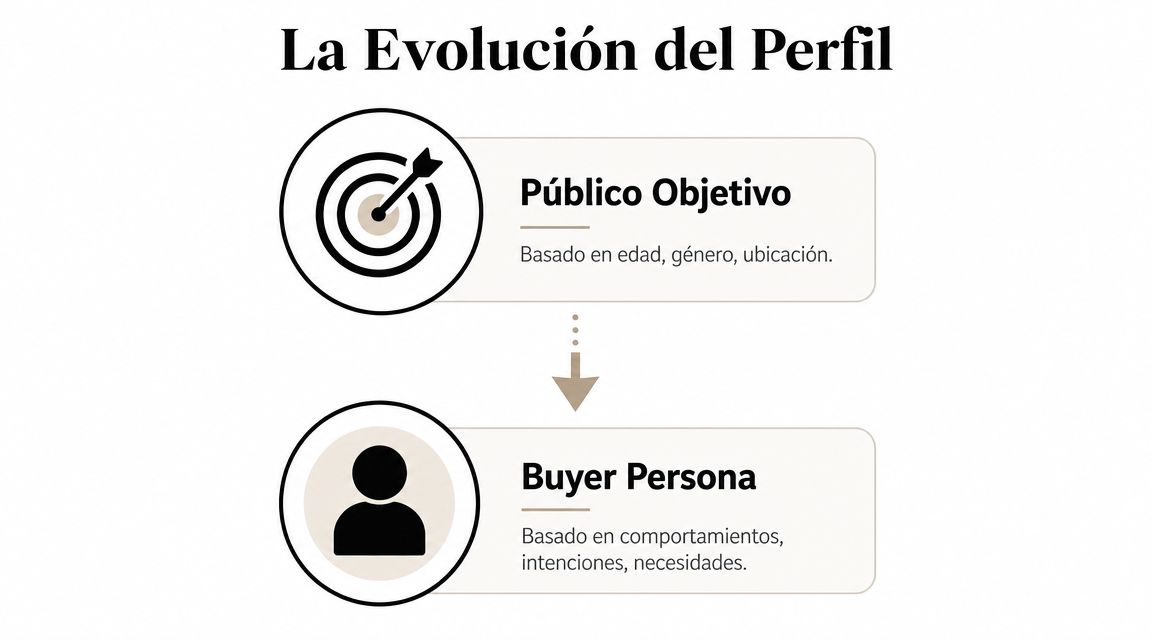
Many companies still confuse market segment with buyer persona. They are not the same. The segment groups. The buyer persona interprets.
If you want to clarify that difference from the ground up, it is worth reviewing how a market segment is defined in strategic terms. The segment tells you whom you are targeting. The buyer persona tells you how that audience decides when it interacts with your brand.
Practical rule: demographics guide acquisition. Behavior guides conversion.
A man of a certain age in Santiago may resemble another in an advertising plan. But if one compares from a mobile device, trusts reviews and abandons when they do not see clear shipping, while the other prioritizes speed and pays as soon as they find stock, you are not facing the same buyer for business purposes.
A contemporary buyer persona needs variables closer to the decision than to identity. The most useful ones are usually:
That shift matters because the digital channel left a trail. The website, the CRM, the forms, the chats and the commercial history show observable behaviors. That is worth more than a comfortable hypothesis coming out of an internal meeting.
The right question is no longer “who is the ideal customer.” The right question is “what sequence of signals leads them to advance or retreat.”
A well-built buyer persona does not improve only marketing. It organizes the company around a logic of real demand. When it is done well, it prevents each area from inventing its own version of the customer.
Today that has an obvious urgency in Chile. E-commerce was again the most dynamic format in Chilean retail, expanding 11.6% in nominal terms and a little over 9% in real terms, while its penetration of total retail reached 12.6% according to the experimental statistics of the Central Bank of Chile, as reported in the e-commerce report of the Santiago Chamber of Commerce. If a growing share of sales happens in digital, understanding how the buyer decides is no longer optional.
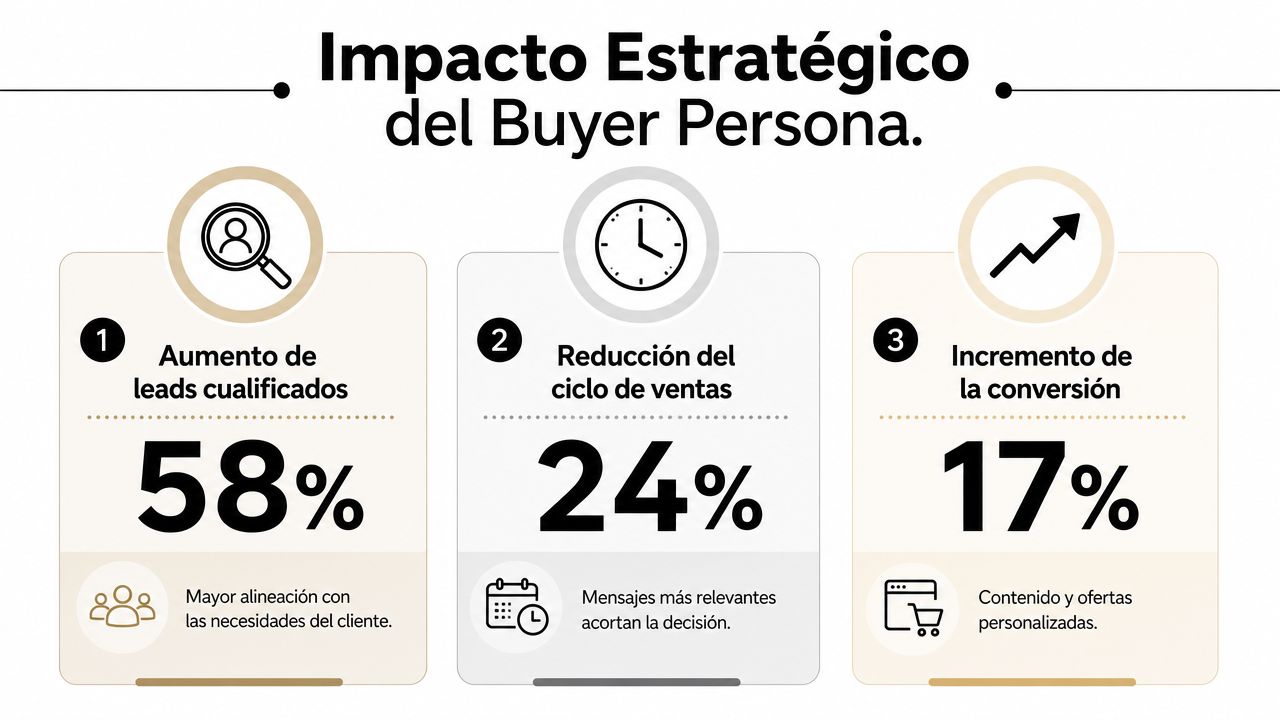
When the company does not have actionable buyer personas, problems appear that seem separate but share the same root.
| Internal signal | What it really reflects |
|---|---|
| Many meetings to “fine-tune the message” | Nobody is clear about which objection matters most |
| Acceptable traffic and weak conversion | The proposition does not connect with real intent |
| Abundant leads and poor closing | Marketing and sales are qualifying with different criteria |
| Frequent redesigns with no impact | Symptoms are being corrected, not causes |
This is not about making profiles for methodological discipline. It is about avoiding strategic waste. If you do not know what each type of buyer expects to read, you end up communicating to everyone and convincing few.
A serious buyer persona improves four things simultaneously:
The right buyer persona does not decorate a strategy. It disciplines it.
It also changes the quality of executive decisions. A leader stops approving ideas “because they sound good” and starts demanding consistency with real customer evaluation patterns.
That is basic competitive intelligence. Your competitor does not need a better product to beat you. It is enough for them to better understand the buyer's mental process.
Building a useful buyer persona is not a creative exercise. It is a process of research, synthesis and validation. If you start from internal opinions, you end up with corporate fiction.
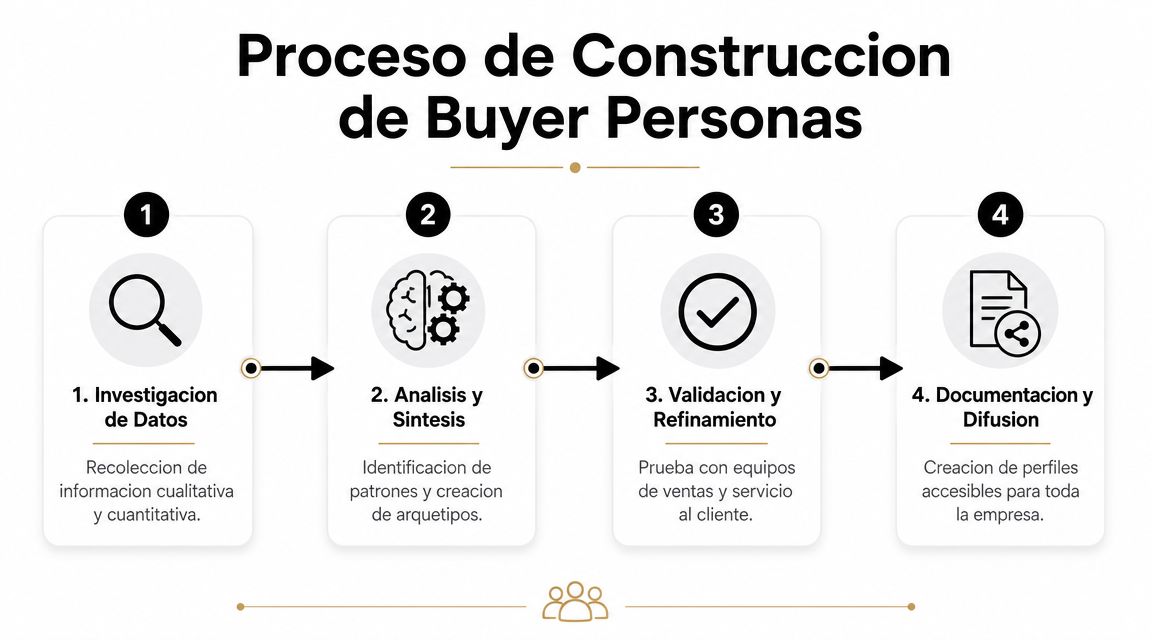
The best sources are not the flashiest. They are the closest to real behavior. In the Chilean context, the usefulness of the buyer persona comes from local data such as interviews, surveys, CRM, web analytics and observable patterns of leads and customers, as Salesforce explains in its review of the concept. That combination makes it possible to detect differences in intent and turn them into actionable hypotheses before continuing to invest in traffic.
The sources that deliver the most value are usually these:
CRM and sales pipeline
There appear decision times, recurring objections, reasons for loss and the prospect's real language.
Web analytics and on-site behavior
They show what content each type of user consults, where they hesitate and at what point they abandon.
Interviews with customers and non-customers
Not to confirm what your team believes, but to detect motivations and fears that do not appear in a dashboard.
Feedback from sales and support
They are the teams that hear friction without filtering. Ignoring them is a leadership mistake.
To understand that journey more completely, it is best to map it within the customer journey, not only within the sales funnel.
Below you can see an audiovisual explanation useful for aligning the team before starting the process:
You do not need twenty fields. You need few fields, but decisive ones. An actionable buyer persona should include, at a minimum:
If any of those points is left blank, the profile is still not useful for the business.
A buyer persona is not approved by consensus. It is validated against reality. If the sales team does not recognize the profile, if the digital behavior does not match or if the messages designed for that archetype do not generate better conversations, the document needs adjustment.
A correct profile produces better questions. An incorrect profile produces false certainties.
This is where some companies support the process with consultancies, analytics platforms or specialized teams. Bigbuda, for example, incorporates buyer persona definition and market analysis as part of its strategic work. It does not replace the company's internal evidence, but it can help turn it into a framework usable by marketing, design and CRO.
The value of the buyer persona appears when it stops being general and adapts to the business model. An eCommerce site should not build its profiles the same way as a B2B company with a long cycle. If you use the same logic for both, you will misread intent and design the conversion path poorly.
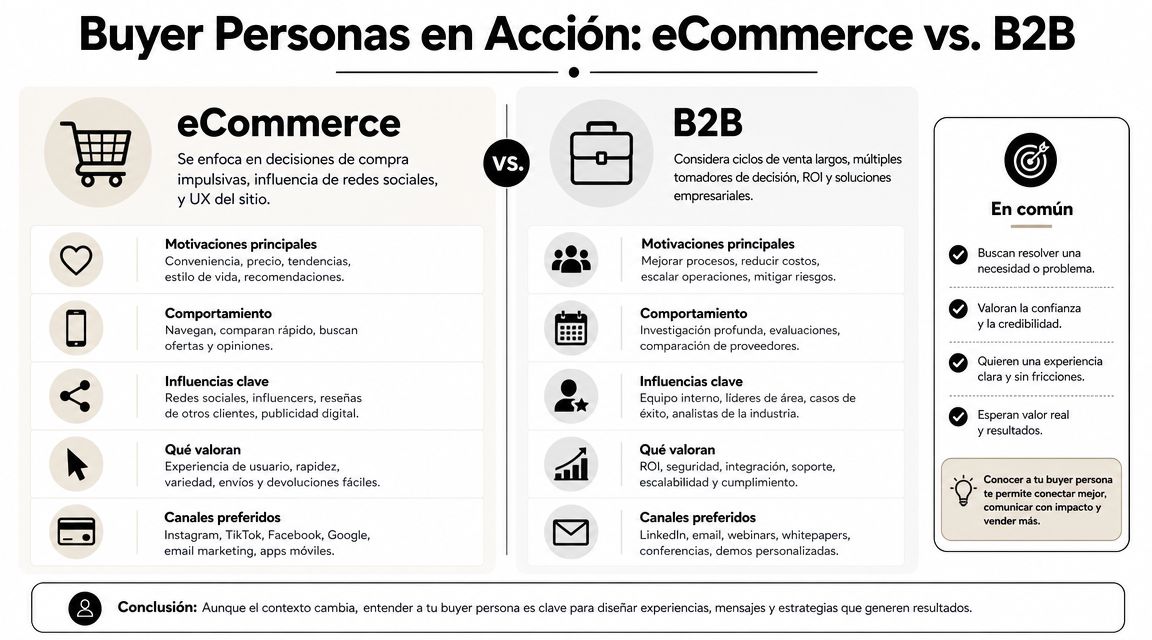
In e-commerce, the buyer persona has to capture fast purchase contexts, immediate comparisons and highly visible trust signals. The central question is not only why they buy. It is what they need to see immediately so as not to postpone.
A useful profile for eCommerce usually includes:
In this context, one person may be very similar to another in income or age, but radically different in behavior. One buys as soon as they find logistical certainty. The other needs external validation before moving forward.
In B2B, the classic mistake is to believe there is a single buyer. What exists, in practice, is a combination of roles with different incentives.
A B2B sales process usually involves at least these profiles:
| Role | What they care about | What holds them back |
|---|---|---|
| End user | Ease, adoption, everyday usefulness | Complexity or learning curve |
| Economic buyer | Risk, return, clarity of proposition | Perceived cost or implementation doubts |
| Technical influencer | Integration, stability, compatibility | Lack of detail or technical ambiguity |
That map changes by industry and company size, but the logic stays the same. If all the content speaks only to the manager who signs, it ignores those who condition the decision before that signature.
In B2B, an isolated buyer persona explains little. A system of personas explains much more.
The difference can be summarized like this:
The important thing is not to memorize these categories. The important thing is to accept that the methodology must adapt to the business's decision structure. If it does not, the buyer persona ends up looking sophisticated while producing poor conclusions.
Here the buyer persona stops being theory and starts generating performance. If the profile identifies motivations, barriers and evaluation criteria, then it can be transformed into concrete hypotheses to improve conversion.
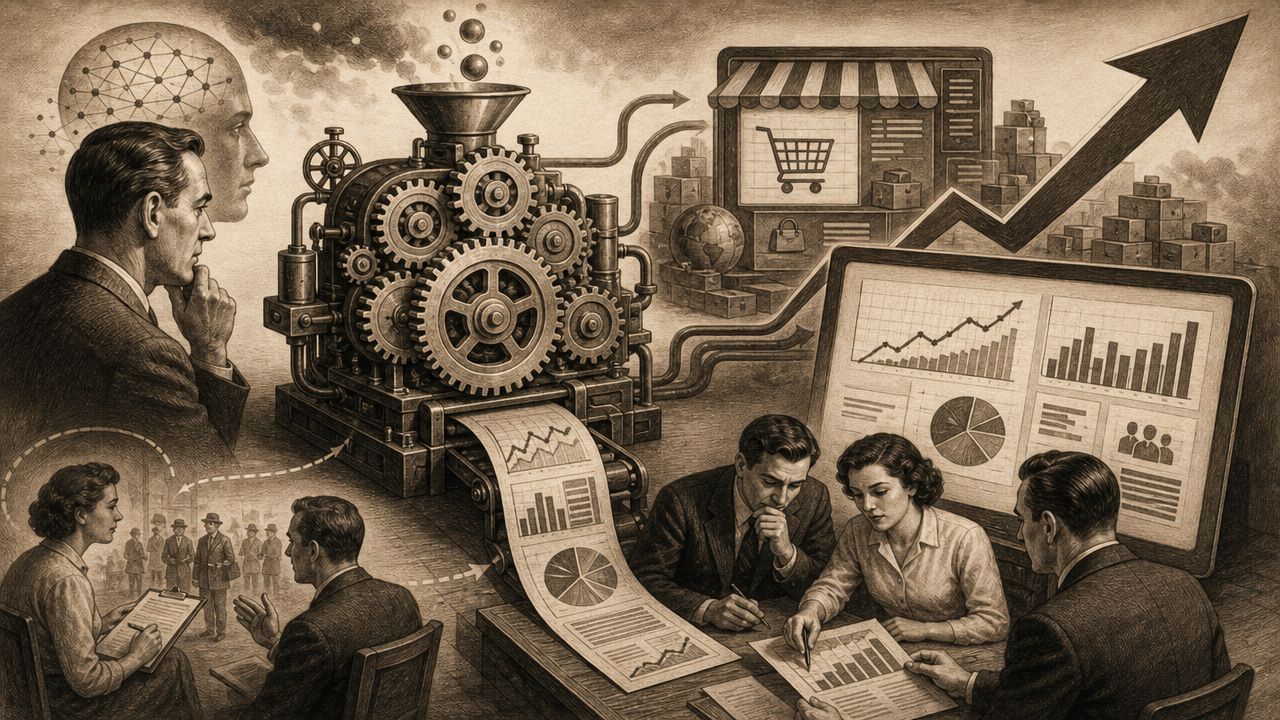
The real usefulness of the buyer persona lies in translating differences in intent into observable decisions. In the Chilean market, that value appears when it is built with interviews, surveys and web analytics, and then used to redefine value propositions or nurturing sequences before investing more in traffic, as already established in the source cited earlier.
A simple framework works well:
Persona insight
“This buyer doubts the credibility of the offer.”
Business hypothesis
If the company reduces visible uncertainty, more users will advance.
Concrete application
Clearer messages, more relevant commercial evidence, a different order of information, less cognitive effort.
You do not need to start with complex tests. What you need is for each adjustment to respond to an identified friction, not to the team's aesthetic preferences.
When the buyer persona is well done, it feeds decisions across several layers:
Value proposition
Which promise to open first and for what type of buyer.
Information architecture
Which doubt to answer first, which later and what content is unnecessary.
Message prioritization
Which arguments work for a new visitor and which for a comparative one.
Nurturing sequences
What content a lead should receive based on their stage and dominant objection.
If the buyer persona does not produce hypotheses, the CRO program becomes a succession of random ideas.
That is the difference between optimizing by intuition and optimizing with judgment. The buyer persona does not replace experimentation. It makes it smarter.
The traditional buyer persona assumed a relatively orderly journey. The customer detected a problem, searched for options, compared and then spoke with brands. That sequence no longer describes well what is happening.
Chile led Latin America in relative AI adoption with 73.07 points according to Microsoft Research's AI Barometer, as noted by HubSpot in its resource on creating personas. That data matters because it indicates that part of discovery and evaluation already happens through assistants, summaries and AI-generated recommendations.
That changes the logic of the buyer persona. Now it is not enough to ask what channel they use or what content they prefer. You also have to understand:
For those evaluating that impact on digital strategy, this landscape connects well with the current use of AI tools for marketing.
AI can compress research, but it does not eliminate the need to understand the customer. It makes it more demanding. If the buyer arrives pre-informed, their objections will be more specific. Their comparisons will be faster. Their patience with generic messages will be lower.
That is why the future of the buyer persona is not in adding more fields to the document. It is in better capturing how the decision process changed. The companies that adapt their profiles to this new environment will interpret intent better. The others will keep talking as if the customer were starting from scratch.
If your company wants to turn the buyer persona into a real growth tool, Bigbuda can help connect research, behavioral data, digital experience and conversion decisions into an actionable framework for eCommerce and B2B.
Usually because of the definition, not the design. Personas that describe tastes and lifestyle, are written by marketing alone and produce no operational consequence stay as internal documentation. If the profile does not redefine messages, change priorities or generate testable hypotheses, it will never move sales or lead quality.
They are not the same. The segment groups; the buyer persona interprets. The segment tells you whom you are targeting, while the buyer persona explains how that audience decides when it interacts with your brand. As a practical rule, demographics guide acquisition and behavior guides conversion.
You need few fields, but decisive ones: the purchase trigger that starts the search, the expected outcome, the main objection that stops progress, the selection criteria that tips the decision, the trust signals that reduce uncertainty, and the channel and context where they research and decide. If any is blank, the profile is not yet useful.
The most useful sources are the closest to real behavior: the CRM and sales pipeline, web analytics and on-site behavior, interviews with customers and non-customers, and feedback from sales and support. In Chile that means combining interviews, surveys, CRM and analytics with observable patterns of leads and customers.
In eCommerce the profile must capture fast purchase contexts: buying moment, sensitivity to friction, required social proof and dominant device. In B2B a single person rarely buys, so you need a system of personas covering the end user, the economic buyer and the technical influencer, each with different incentives and blockers.
A buyer persona is not approved by consensus; it is validated against reality. If sales does not recognize the profile, if digital behavior does not match, or if messages built for that archetype do not generate better conversations, the document needs adjustment. A correct profile produces better questions, not false certainties.