










Solutions
Explore how to grow

Most content about age generations makes the same mistake: it describes cultural profiles and then assumes that is enough to sell more. It is not enough. Knowing who is a boomer, Gen X, millennial or Gen Z is of little use if the company keeps showing the same message, the same flow and the same level of friction to everyone.
Need help with this? Discover our digital marketing service.
The real problem is not a lack of labels. It is the poor translation of those labels into business decisions. Many brands still act as if age alone explained conversion. But the debate about generations rarely clarifies how conversion changes when older users already operate in digital while gaps in adoption and trust still exist. Nor does it resolve a very widespread assumption: that Gen Z always converts better because they are “digital.” That assumption is incomplete and can lead to wasting investment if the experience does not respond to what each cohort really needs in payments, support, clarity or speed, as this analysis from El Orden Mundial on demographic generations argues.
For a CEO or a marketing director, the correct reading is different. The risk is not “not knowing the generations.” The risk is operating an eCommerce or a B2B site with a single conversion logic for audiences that do not process trust, urgency or navigation the same way.
If one cohort needs visible security signals and another tolerates less waiting on mobile, the same campaign can perform very differently even with similar traffic. There the strategic opportunity appears. Generations are not a marketing taxonomy. They are an initial way to organize hypotheses about friction, intent and digital expectation.
Treating all audiences as if they responded the same way is an expensive decision. In acquisition, it raises the cost per useful result. In conversion, it reduces the performance of the traffic you already paid for. In branding, it installs an experience that feels generic, untrustworthy or unnecessarily slow depending on who uses it.
The superficial conversation about age generations has been trapped in stereotypes for years. Young people equal speed. Older people equal digital resistance. That simplification does not help run a company. What matters is something else: what frictions each group tolerates, what signals they need to advance and in what context they interact with your site.
The business opportunity is not in guessing which generation “buys more,” but in identifying which cohorts respond better to visible trust, simple navigation, social proof or lower latency.
That nuance matters more in Chile because digital adoption does not eliminate differences in trust. It makes them more visible. An older user may buy online without a problem and still abandon when faced with an ambiguous form or a checkout that does not convey security. A young user may move around digital with ease and still leave if the site loads slowly, demands too many steps or does not adapt well to mobile.
Three costs usually go unnoticed in the boardroom:
Generations are useful. But they are only useful when they become a tool for thinking better, not an excuse to generalize.
The modern concept of generation was developed by Karl Mannheim. In practical business use, the most widespread cohorts are baby boomers (1946-1964), Generation X (1965-1980), millennials (1981-1996) and Generation Z (1997-2012), according to the reference from Iberdrola on coexistence between generations. That same regional corporate reference reported that, at the close of 2025, millennials represented 36% of its workforce, Generation X 25%, Generation Z 22% and boomers 17%, which illustrates a key reality for any company: generations do not compete separately, they coexist in the same business.
The strategic usefulness of these cohorts is not in memorizing dates. It is in understanding that each group was socialized under different technological contexts and, therefore, arrives with different expectations at the same digital asset.
An executive reading would be this:
GenerationFrame of referenceRisk for the businessBoomersLater digital adoptionLower tolerance for ambiguity and low trustGen XTransition between analog and digitalFriction if the site demands too much cognitive effortMillennialsDigitization integrated into everyday lifeThey punish slow or unclear experiencesGen ZInternet and immediacy as a natural environmentThey leave quickly if mobile, content or flow do not respond
The mention of Generation Alpha can be useful as a future observation, but for conversion decisions today the executive focus is usually on the active cohorts of purchasing, work and leadership.
The usual mistake is to treat these categories as isolated compartments. They are not. They coexist in the same funnel, in the same purchasing committee and often within the same household. That changes commercial planning. A proposition for “the whole market” usually becomes a proposition with little fit for anyone.
That is why it is best to think of generational segmentation as part of the analysis of market segment, not as a replacement for it. The generation helps organize initial signals. It does not replace variables such as income, life stage, context of use or purchase motivation.
Leadership rule: if a company does not know which cohorts predominate in its traffic, it is deciding on experience and message with a partial view of the business.
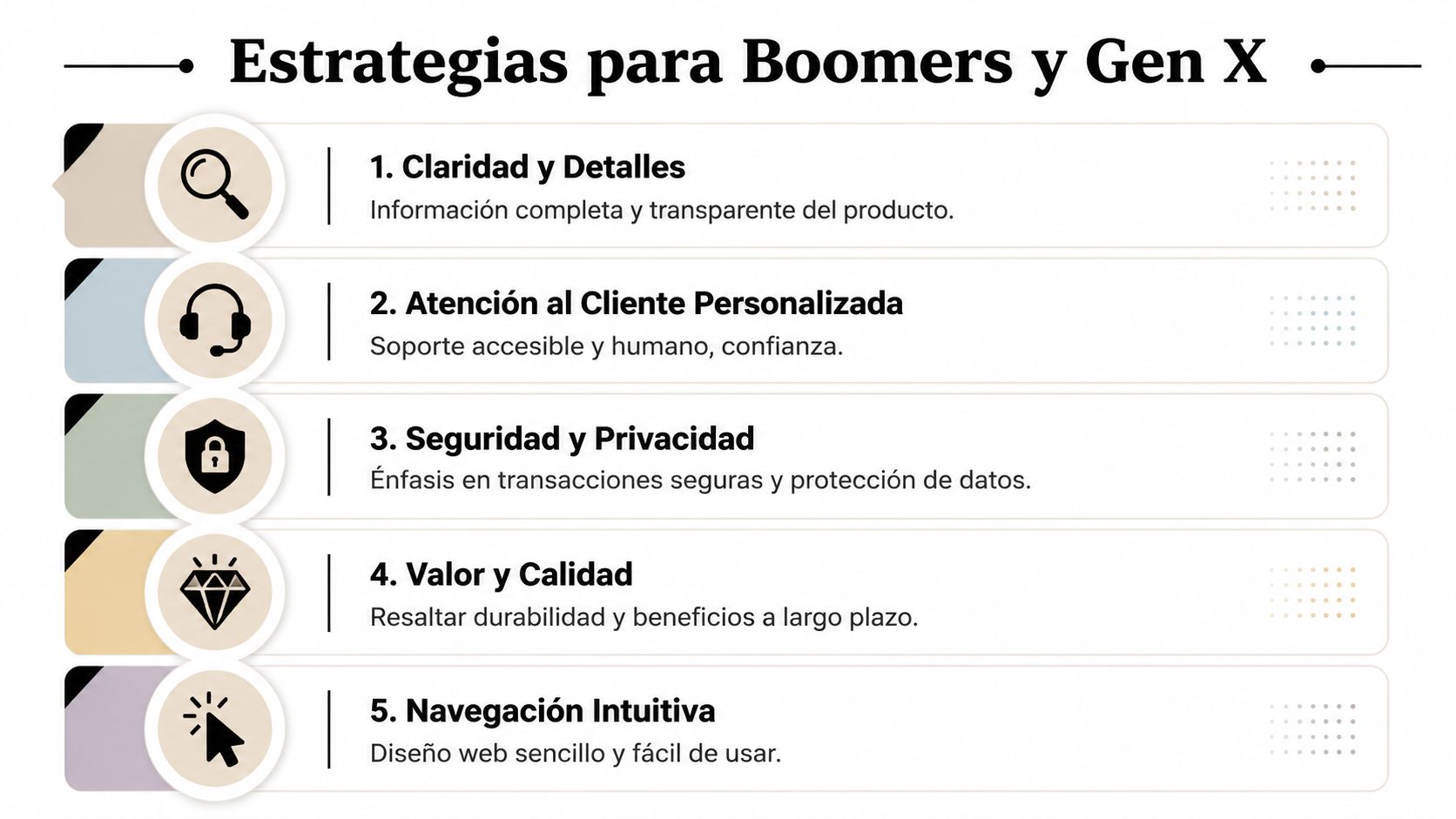
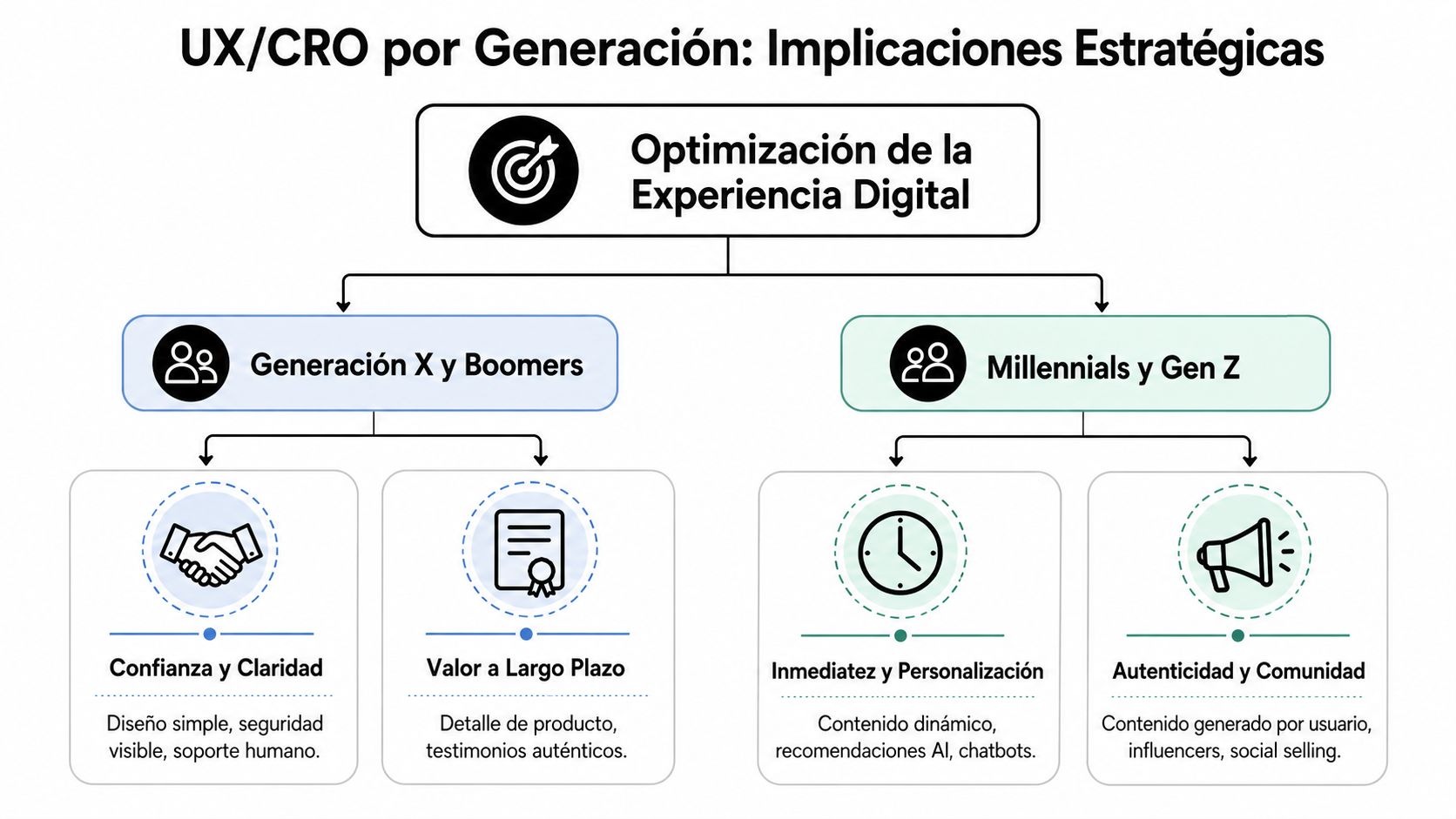
Boomers and Gen X share a critical characteristic for conversion: their relationship with digital tends to be more deliberate. It does not mean a lack of capacity. It means they evaluate the clarity of the environment more carefully before advancing.
The business implication is direct. According to Repsol on Generation X and Z, for Boomers and Gen X the conversion strategy should focus on reducing cognitive load, simplifying forms and reinforcing trust. That point changes the logic of commercial design: less ornamentation, more immediate comprehension.
These cohorts tend to penalize three things before others:
That is not a tactical detail. It is revenue risk. A site that forces users to “discover” instead of explaining converts worse when the audience demands context and certainty to continue.
Many brands believe that modernizing means compressing text, hiding detail and prioritizing aspirational visuals. That approach can work in certain segments, but it harms conversion when the user needs to confirm they are in a serious environment.
A board should look at this cohort with simple questions:
An elegant but ambiguous flow can look current and, at the same time, sell less.
This video illustrates well why the relationship between generations and digital behavior requires nuance, not caricatures.
For these cohorts, the opportunity is not in “making it simpler” in the abstract. It is in designing an experience where trust is not a promise, but visible evidence from the first scroll.
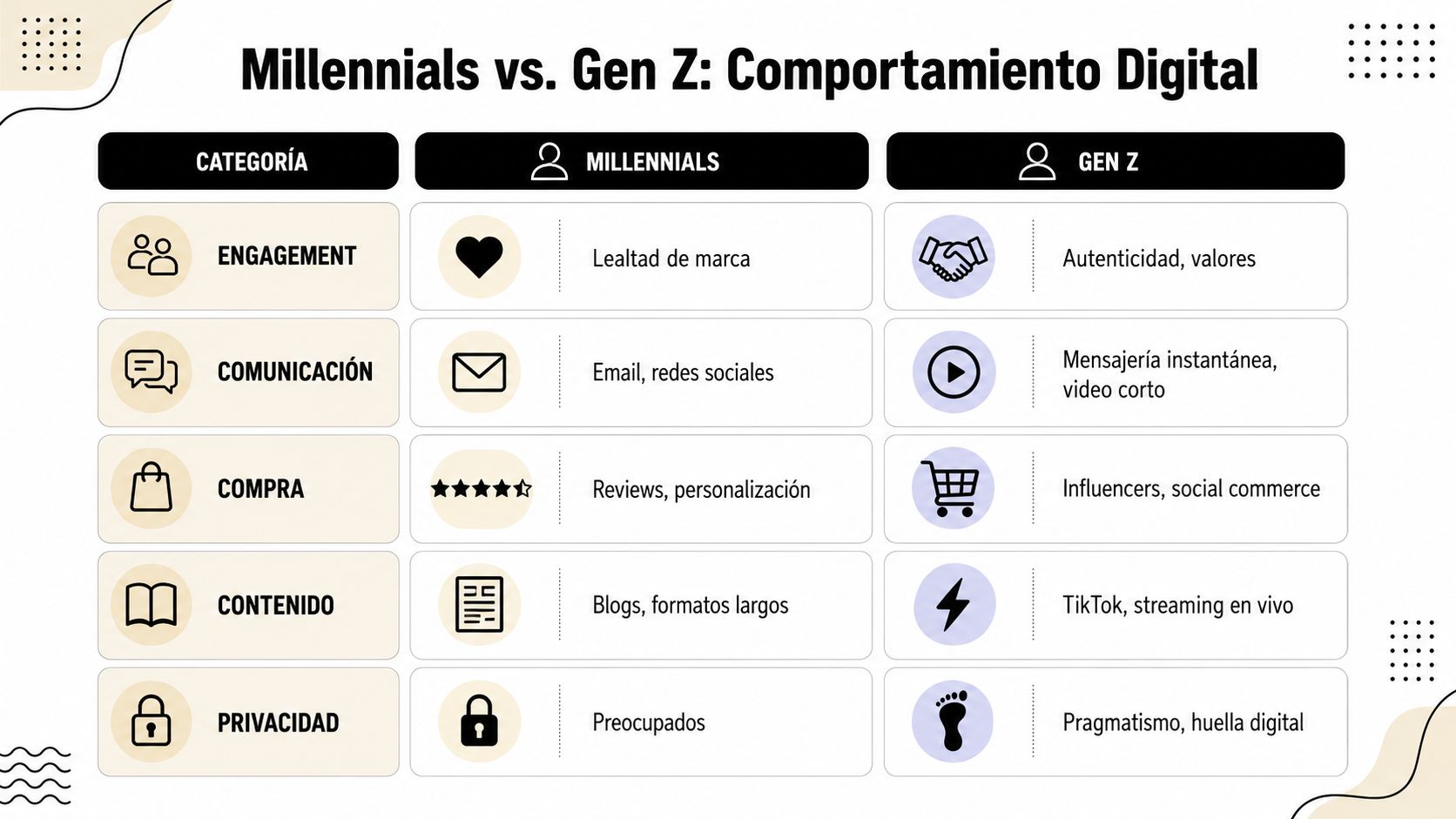
If Boomers and Gen X penalize ambiguity, millennials and Gen Z penalize accumulated friction. They do not expect extensive instructions to interact with a digital environment. They expect the environment to work at the pace of their context.
The relevant difference for the business is not aesthetic. It is operational. A site can look fine and still lose conversion if on mobile it demands too many steps, delays the response or distributes information poorly.
The evidence cited in Dialnet on millennials and centennials notes that Millennials and Centennials rely heavily on mobile devices to communicate and transfer knowledge. For conversion, that observation forces you to think of the funnel from one premise: if the dominant interaction happens on a small screen, each friction weighs more.
The same source holds that, for effective CRO, the site must be mobile-first, reduce form steps and minimize latency. It is not a cosmetic preference. It is a condition for the intent not to break before reaching conversion.
Millennials and Gen Z compare your experience with the general standard of what is digital. Not just with your direct competitor. They compare with instant messaging, short video, interfaces that respond quickly and processes that do not ask for more than necessary.
In business terms, this creates two opportunities and two risks.
DimensionOpportunityRiskMobile-firstCapture intent in a real context of useLose users due to long forms or poor adaptationPerceived speedSustain the continuity of the funnelIncrease abandonment before the checkout or lead formVisual clarityAccelerate comprehension and decisionOverload with blocks, modals or poor hierarchySelf-serviceAllow progress without human frictionFrustrate if the user cannot find a quick answer
It is not advisable to read this as “young people always want less information.” The correct reading is different. They want less friction to access information and act on it. That difference changes how a company prioritizes experience, technology investment and funnel architecture.
The executive point is not to choose between segmenting by generation or by behavior. The point is to use the generation as a working hypothesis and then validate or correct that hypothesis with real usage data.
The most useful warning comes from Uzink on generational marketing: generational labels do not describe reality well when life milestones shift due to income and connectivity, and in eCommerce optimization depends more on frictions of UX, trust and speed than on age itself. That idea changes the growth discipline. The generation stops being an answer. It becomes a smart way to formulate questions.
A company mature in CRO does not start by asking “which generation buys more.” It starts by asking:
That shift is important because it avoids two frequent mistakes. The first, overinvesting in empty generational discourse. The second, underestimating that within the same generation there are differences by life stage, income or digital habit.
If the company only looks at age, it loses the chance to detect that a high-intent mobile buyer may resemble another mobile buyer more than someone from their same age cohort.
Advanced segmentation mixes layers. Generation on top. Behavior below. The result is more useful for a board because it allows resources to be allocated with impact logic.
A reading framework can look like this:
That translates into concrete decisions. If an older cohort arrives from a brand search and abandons at the form, the priority should not be “making it more modern,” but reinforcing clarity and reducing uncertainty. If a young cohort arrives from social or a mobile campaign and drops off before the final step, the priority will probably be to simplify the flow and lower latency.
For a company that is reviewing its digital experience, a serious conversation about UX and UI should include this question: are we designing for an average audience that does not exist, or for behavior patterns we can actually observe?
A strategy based on age generations only becomes useful when it enters analytics. Without measurement, it remains an opinion with the appearance of segmentation.
In Chile and comparable markets, a relevant reference is that official demographic sources such as the INE publish population by “generation (age as of December 31),” which makes it possible to track cohorts with a statistical basis and compare population with commercial performance, as shown in this table from the INE on population by generation. The lesson for the business is clear: it is best to build a common base between demographics, life stage and digital performance.

The discipline does not start with the test. It starts with the reading model. For an executive team, that means cross-referencing age cohorts with business variables that do affect revenue.
A useful dashboard should make it possible to observe, at least comparatively:
The beauty of this approach is that it stops arguing “which generation is better” and starts showing where the experience is creating or destroying value.
Not all improvements should be rolled out to everyone. First it is best to validate hypotheses with controlled tests. The logic is simple:
HypothesisObserved cohortBusiness signalA security message reduces frictionBoomers or Gen XMore progress in forms or checkoutA shorter flow improves continuityMillennials or Gen ZLess abandonment on mobileVisible support accelerates the decisionCohorts with greater sensitivity to trustBetter progression toward contact or purchaseLower latency sustains intentMobile users from digital cohortsGreater completion of the process
Practical decision: first segment, then compare and only afterward change the experience. If you change before measuring, you only replace one assumption with another.
When the team needs to consolidate these readings into executive reporting, an environment like Looker Studio Pro for business visualization can help organize cohorts, funnels and behavior without losing traceability in the conversation with management.
Age generations remain useful. But their real value is not in the cultural description, but in the ability to improve growth decisions. They serve to anticipate frictions. They serve to prioritize hypotheses. They serve to prevent a company from designing for a nonexistent average audience.
The difference between a brand that “knows” the generations and one that grows with them is in the method. The first stays in stereotypes. The second connects cohorts with behavior signals, context of use, trust and funnel performance.
That change of approach has an important consequence for leadership. The question stops being which generation is entering the site. The question becomes what that cohort needs to advance without friction and how the company validates that this reading is correct.
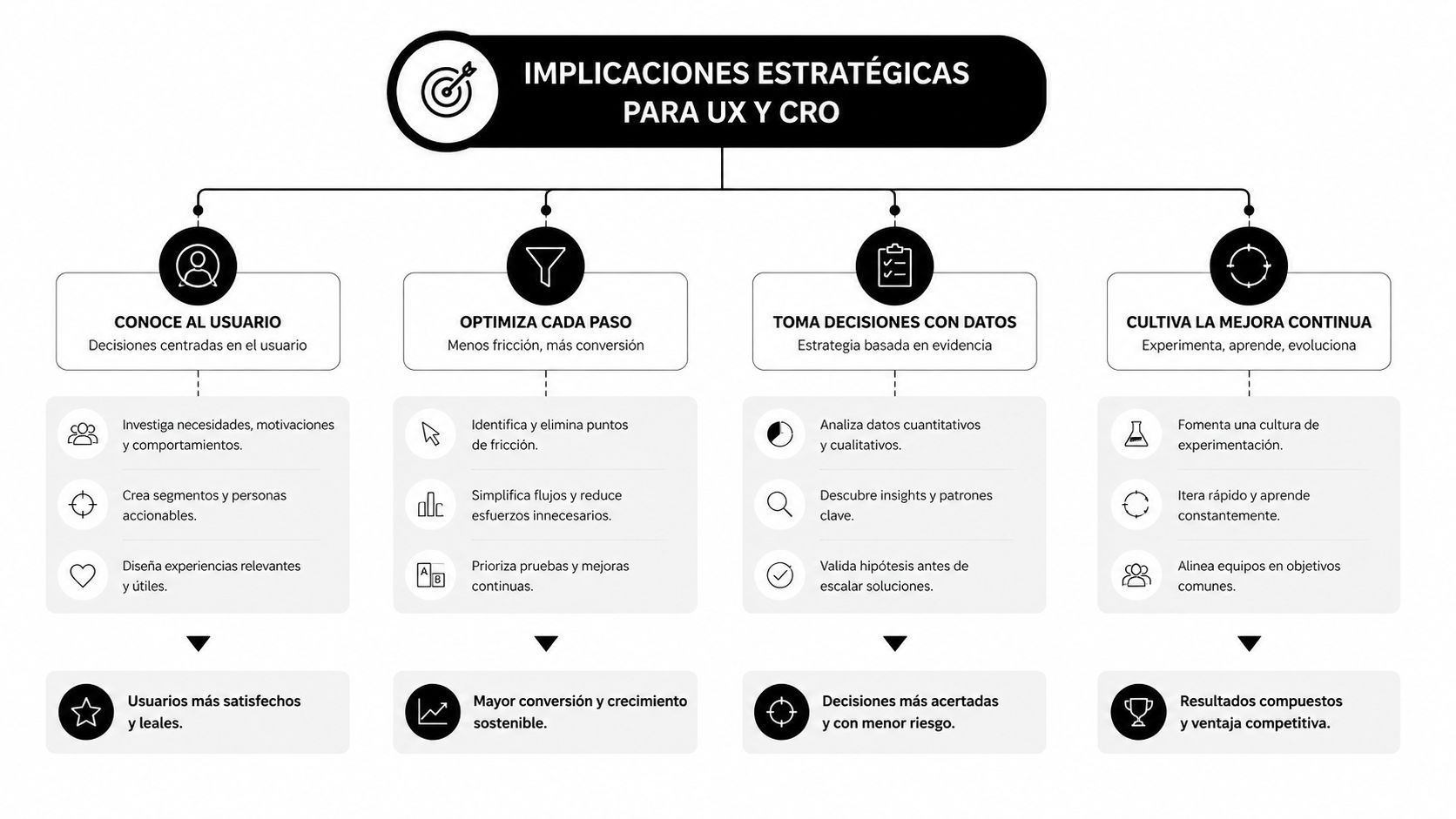
A reasonable executive framework can be summarized in four moves:
There the competitive advantage appears. Not in knowing the names of the generations, but in turning that information into a commercial learning machine. The companies that do this best will not necessarily have more traffic. They will have a more precise reading of why part of that traffic buys, abandons or returns.
When an organization understands that, the conversation about generations stops being demographic and becomes strategic. And in digital, that difference usually separates those who only attract visits from those who build sustained growth.
If your company needs to convert better without increasing investment in traffic, Bigbuda can help you transform data, UX and experimentation into a more profitable growth strategy for eCommerce and B2B businesses.
The most widespread cohorts in business use are baby boomers (1946-1964), Generation X (1965-1980), millennials (1981-1996) and Generation Z (1997-2012). Generation Alpha can be a useful future observation, but conversion decisions today usually focus on the cohorts that are active in purchasing, work and leadership.
For these cohorts the strategy should reduce cognitive load, simplify forms and reinforce trust. They tend to penalize ambiguity in the proposition, opaque processes without clear progress signals and insufficient proof of trust. Less ornamentation and more immediate comprehension usually work better than aspirational visuals.
They penalize accumulated friction rather than ambiguity. Millennials and centennials rely heavily on mobile devices, so effective CRO requires a mobile-first site, fewer form steps and minimal latency. They compare your experience with the general digital standard, not only with your direct competitor.
No. Generational labels describe reality poorly when life milestones shift due to income and connectivity, and in eCommerce optimization depends more on frictions of UX, trust and speed than on age itself. Use the generation as a working hypothesis and validate it with real usage data.
At a minimum it should allow comparison of conversion by cohort and device, abandonment by funnel step, differences between new and returning users, behavior by traffic source and signals of commercial value by segment. That stops the debate about which generation is better and shows where experience creates value.
First segment, then compare and only afterward change the experience. If you change before measuring, you only replace one assumption with another. Validate hypotheses with controlled tests, for example whether a security message reduces friction for boomers or Gen X, or whether a shorter flow improves continuity on mobile.