










Solutions
Explore how to grow
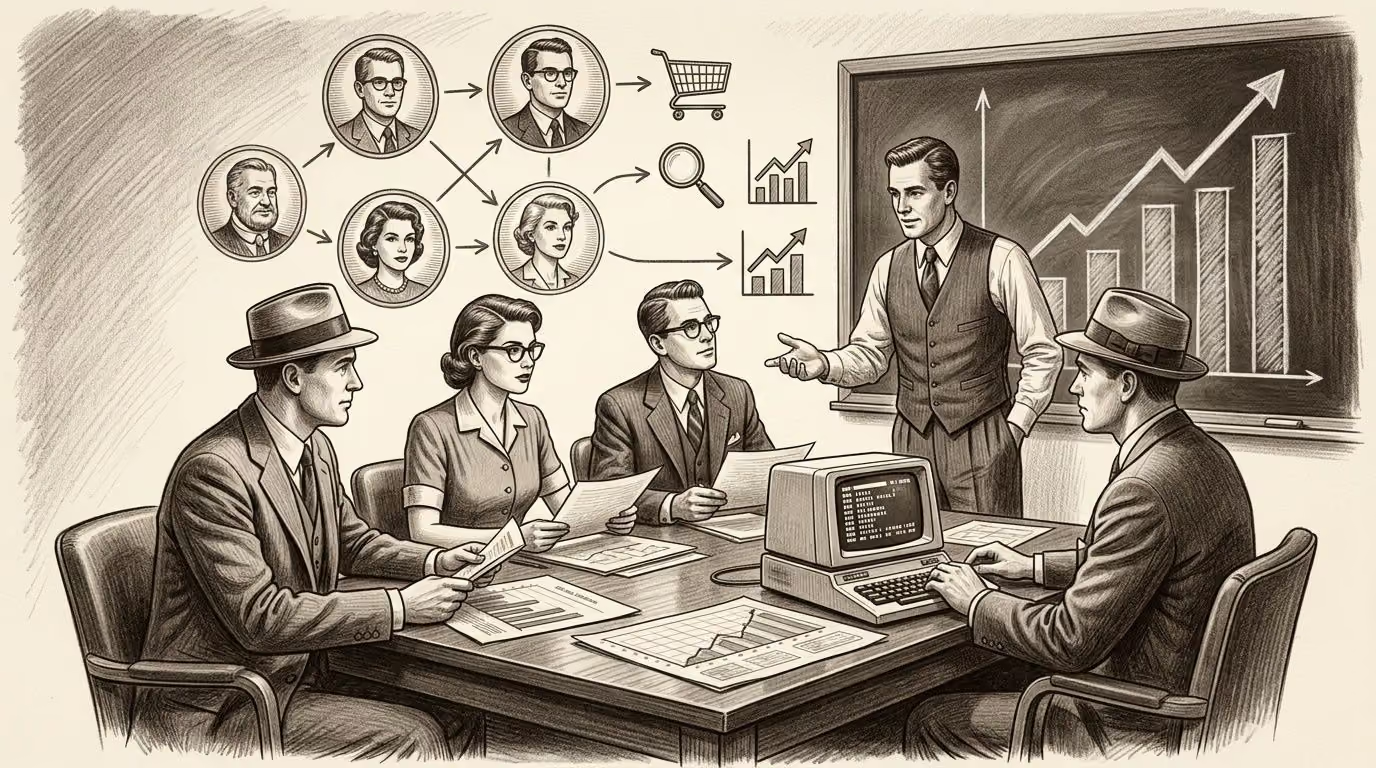
One scene keeps repeating in boardrooms, commercial committees and growth teams. Digital investment rises, traffic exists, dashboards show movement and, even so, the business fails to turn that effort into a proportional growth curve. The first instinct usually points to marketing. Not enough demand, not enough efficiency, not enough differentiation. In many cases, the diagnosis goes wrong long before it reaches those answers.
If you want to dig deeper, take a look at our digital marketing service.
The reason is strategic. The traditional way of classifying types of clients tends to sort end consumers by habits, value or purchase frequency. That framework works for campaigns and commercial segmentation, but it adds little when the real question is where a company's true economic opportunity lies. A digital business competes by a different logic: the length of its sales cycle, the weight of trust in the decision, the need for human support, the recurrence of revenue and the cost of capturing each new customer.
That is why it pays to redefine the concept. In this analysis, types of clients are not profiles of individual buyers. They are business archetypes. A fashion eCommerce, a B2B SaaS company, a professional services agency or an industrial player operate with different growth frictions, even when they share channels, technology and pressure to improve results.
That shift in perspective changes how resources are allocated.
Classifying the company correctly makes it possible to understand which variable limits growth most. In some cases, the friction lies in the speed of the decision. In others, in the complexity of the evaluation process, in the dependence on trust or in the concentration of revenue in a few accounts. Seen this way, the right category does not describe an industry. It describes an economic structure. And that structure defines which opportunities have the greatest impact on conversion, profitability and scale.
It also changes the leadership conversation. Instead of debating isolated tactics, the company can prioritize decisions based on its demand model and its potential to capture value. That is the difference between optimizing campaigns and putting a growth strategy in order. For businesses evaluating that transition, a framework of growth-oriented digital marketing for eCommerce helps connect acquisition, conversion and business under a logic far more useful than simply segmenting audiences.
The eight types that follow are not closed sectors. They represent patterns of operation that concentrate very different risks, margins and opportunities. Identifying them well makes it possible to stop treating all digital growth as if it followed the same formula.
In fashion and online retail, the problem is usually not a lack of interest. It is the distance between intent and close. These are businesses that can attract a lot of traffic, but they also expose the user to quick comparisons, mobile abandonment and impulsive decisions that are lost in seconds.
That is why, within the types of business clients, this archetype represents an operation where decision speed matters as much as the brand. In Chile, impulsive customers account for 28% of total eCommerce, according to data cited on the Chilean market. That single figure changes the strategic reading of the retail channel. A significant part of the business depends on buyers who do not want a long process, but rather an experience that quickly confirms their intent.
When a fashion store treats all of its traffic as if it were rational, it cools demand. The impulsive segment responds differently to urgency, to visual clarity and to ease of purchase. In the same dataset, Shopify stores optimized for CRO show an average conversion rate of 4.2% in this profile, compared with a national average of 2.1% for the channel. The conclusion is not tactical. It is economic. The retailer that aligns its experience with the right purchase psychology captures more value from the traffic it already paid for.
Speed matters too. In that same framework, load times under 2 seconds on WordPress or Webflow are shown to help retain 85% of impulsive sessions. For a fashion brand with high mobile dependence, that turns site performance into a margin issue, not just an experience one.
In online retail, every additional second affects more than UX. It filters out the least patient buyers, who tend to be the ones closest to purchasing.
Not all fashion brands face the same risk. Independent brands, with visual catalogs and a strong dependence on campaigns, tend to suffer more when the experience does not match the intent. Those operating on Shopify or WooCommerce have a clear advantage if they understand that their types of clients should not be read by demographics alone, but by behavior.
To dig deeper into this business logic, it is worth reviewing the approach to digital marketing for eCommerce, because it connects acquisition, conversion and profitability under a single reading.
A clear example is the fashion brand that gains visibility through paid media and social, but does not translate that interest into consistent sales. In that scenario, the error is not necessarily in acquisition. Often it lies in having misread what kind of digital business it really is.

A software team can generate demos every week and still close less than expected. In B2B SaaS, that mismatch usually appears when the company interprets its types of clients as audience segments rather than as decision-making roles within a complex purchase. The problem is not only commercial. It is also strategic, because it limits how much value is captured from traffic that already arrived in evaluation mode.
Here, conversion rarely depends on a single individual decision. Gartner describes B2B purchases as processes with multiple participants, different priorities and more friction over consensus than over initial interest, as it explains in its analysis of buying group size in B2B. For a SaaS company, that structure changes how the site, the content and the value proposition should be read. The digital asset stops being a lead-generation channel and starts operating as a validation layer for several areas at the same time.
In this archetype, growing is not first about expanding reach. It is about reducing doubt. A product can solve a real problem and still lose opportunities if its digital presence does not answer questions that matter to finance, operations, technology and the business.
That is why a SaaS company with good traffic can still have a fragile pipeline. The frequent cause is a narrative that explains features but does not make clear the organizational impact, the switching cost or the ease of adoption. In markets with consultative selling, clarity does not just improve brand perception. It improves the probability of advancing between stages.
Many SaaS companies present a single commercial story to all of their buyers. That oversimplification reduces persuasive power precisely where the business is most defined. A CMO evaluates speed of impact. A CTO reviews integration, security and technical debt. A CFO needs signals of return, risk and payback horizon. If everyone receives the same argument, the company looks less prepared than it actually could be.
This point matters because in B2B SaaS the final buyer rarely acts alone. There are sponsors, evaluators and approvers. Each one demands a different form of certainty.
Market signal: An overly generic SaaS proposition usually indicates that the company still describes its product better than it understands its buying process.
A recurring pattern is software that lands meetings but does not consistently turn that interest into qualified opportunities. In those cases, the limitation usually lies neither in sales nor in acquisition alone. It lies in the architecture of trust that connects message, proof, objections and internal consensus. That logic also appears in the analysis of how to scale digital marketing in B2B companies, where growth depends on coordinating positioning, credibility and demand capture with a more precise reading of the buying business.
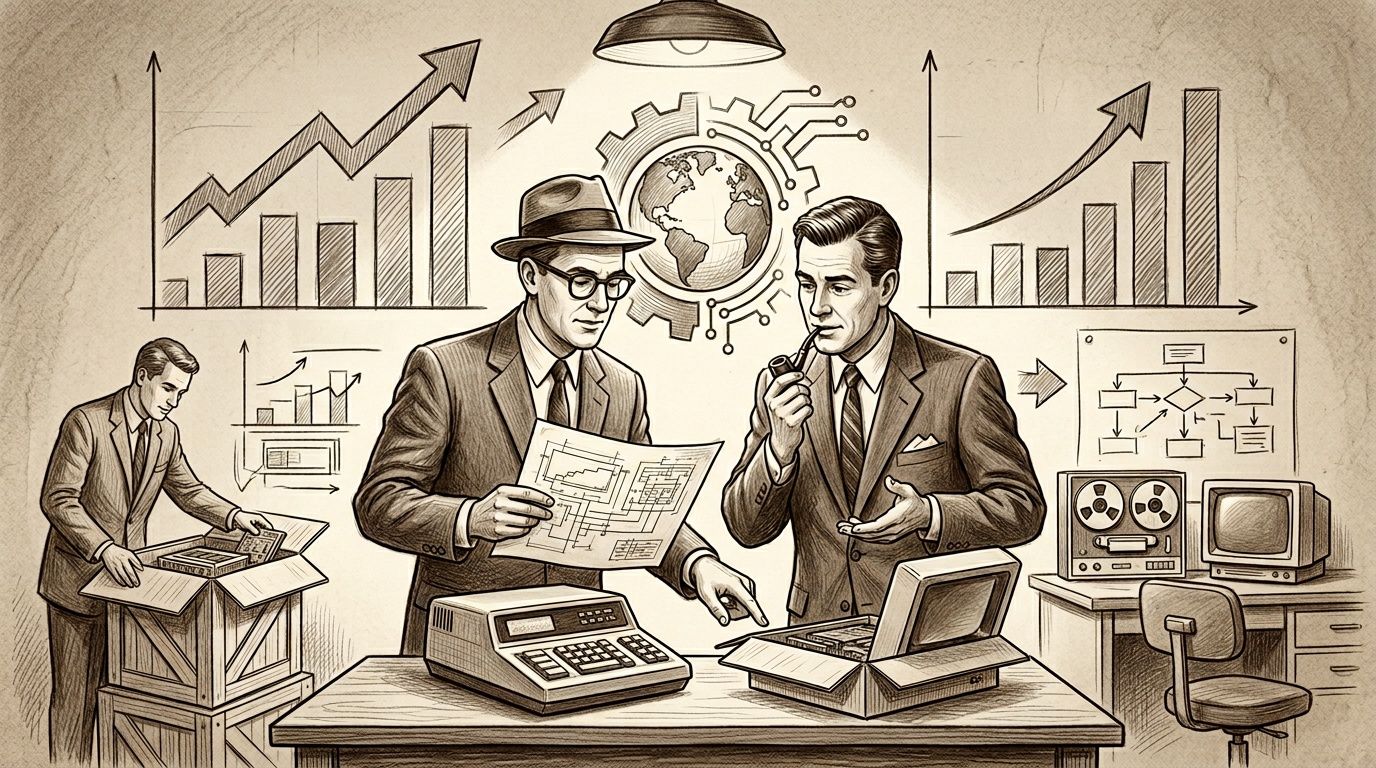
Electronics and technology operate with a demanding paradox. The user arrives with high intent, but also with a much stricter standard of information. In this category, traffic is not valued by volume alone. It is valued by its level of prior research and by how easily it can migrate to another competitor if it does not find trust.
That makes these companies a very different type of business client from emotional retail. Here the site is part of the perceived product. If the experience feels confusing, slow or unsophisticated, the user infers that the company could be too.
In categories such as computers, components, accessories or devices, buyers tend to compare models, specifications and availability before committing. That is why an electronics store does not compete on price alone. It competes on commercial legibility.
The most important signal is that part of traditional loyalty can be misleading. According to the analysis of apparently loyal customers in Chilean B2B and B2C, businesses with more than 10,000 monthly visits show a churn of 28% when conversion rates stay below 2.5%, even with positive reviews. The strategic reading is powerful. A business can be liked and still lose demand if it does not remove friction at the moments of decision.
This especially affects electronics. Informed buyers do not forgive slowness, doubts about stock or weakness in the technical presentation. In this archetype, every failure erodes accumulated trust.
A mature technology store is not simply the one with the largest catalog. It is the one that reduces the cognitive cost of deciding. That has direct implications for commercial leadership and marketing.
A technology company does not lose only for lack of traffic. It loses when it forces the buyer to finish their research outside its ecosystem.
A realistic example is the retailer specialized in gaming or components that achieves high-intent searches, but does not turn that attention into sales because the key information is scattered. In this kind of company, growth depends less on expanding the audience and more on better organizing purchase certainty.
A general manager lands on the site of a consultancy because they face a decision with real impact. It could be a commercial restructuring, a legal problem or a drop in demand generation. In that context, the visit is not looking for inspiration. It is looking for signals of judgment, applicable experience and a clear path to assess whether it is worth starting a conversation.
That is the distinctive feature of this archetype within the types of business clients. Agencies, consultancies and professional firms do not sell a product that is easy to compare. They sell expert judgment. And in markets where the purchase carries financial, operational or reputational risk, conversion depends less on the volume of interest and more on the ability to reduce uncertainty before the first contact.
Many firms compete with an incomplete reading of their own market. They assume that historical reputation or referrals are enough to sustain demand. In practice, much of the filtering happens long before the meeting. The buyer assesses whether the company understands complex problems, whether it can translate them into results and whether it offers an interaction commensurate with the level of risk in the decision.
That is why, in professional services, the digital presence serves a different function than in other archetypes. It does not just attract traffic. It acts as a mechanism of commercial validation. If that validation is weak, the firm does not just lose submitted forms. It also loses high-value opportunities that never advance because the prospect did not find enough evidence to justify the next step.
The growth logic here differs from that of an eCommerce or a SaaS subscription. Value does not come from scaling low-commitment transactions, but from turning trust into qualified commercial conversations.
A professional firm does not compete on visibility alone. It competes to be considered a trustworthy option at the moment when the cost of being wrong is high.
A frequent case is the agency or consultancy that generates interest from search, content or referrals, but receives immature inquiries or meetings with a low probability of closing. That gap usually points to a problem of economic positioning, not just communication. The firm knows more than it manages to demonstrate, and that difference reduces its ability to capture profitable demand.
The companies that grow best in this archetype tend to resolve a concrete tension. They keep their technical sophistication, but translate it into signals that a decision-maker can interpret quickly. That point has direct implications for commercial leadership and marketing. In professional services, improving conversion is not just about capturing more leads. It is about making more visible the strategic value that already exists within the business.
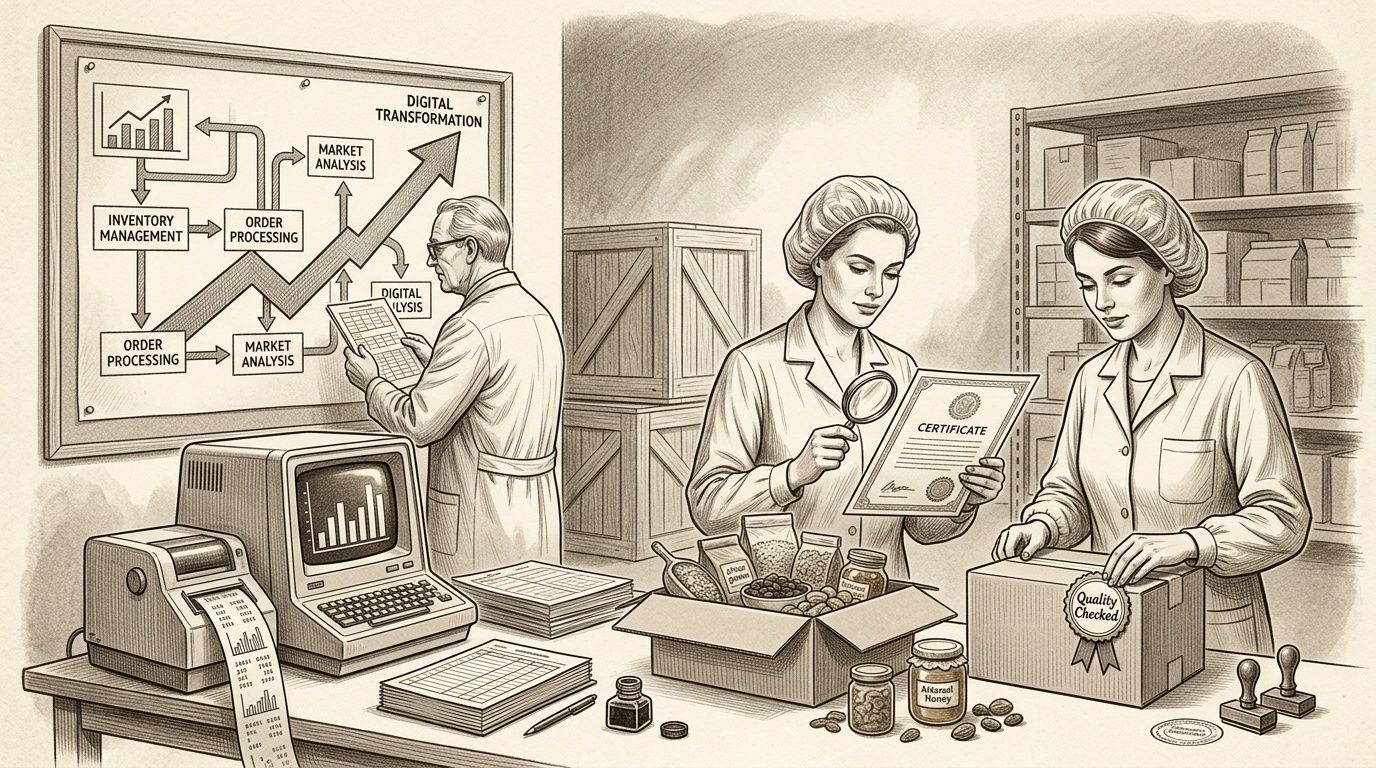
A healthy-food eCommerce can sell well one week and destroy value the next. This happens when the business interprets each order as an isolated conversion, even though its real economics depend on repetition, trust and predictability of demand. In this archetype, the types of clients are not better understood by age, interests or brand affinity. They are understood by the quality of the revenue they can sustain over time.
That difference changes the strategic reading of the digital channel. An online store selling functional drinks, supplements or organic products does not compete only to attract traffic. It competes to become a recurring option within a consumption routine. If it succeeds, it improves revenue, stabilizes inventory and reduces dependence on promotional campaigns to sustain volume.
In repeat-consumption categories, the first purchase carries limited weight if it does not open the door to a second, a third and a more predictable relationship with the customer. That is why the most important asset is not only the buyer base. It is the proportion of customers who fold the brand into a habit.
The business implication is clear. Two stores with a similar order volume can have very different economic profiles. The one that achieves repetition operates with more stable demand, better withstands acquisition pressure and can project growth with less uncertainty. The other needs to reactivate sales constantly, with more exposed margins and less visibility over its future revenue.
The opportunity in this type of business client arises from an uncommon combination. There is potential purchase frequency, room to build brand and a direct relationship between perceived trust and customer lifetime value. That makes it especially fertile ground for growth strategies based on conversion and retention, not just acquisition.
In food, beverages and natural products, growing is not just about selling more units. It is about building a consumption relationship that can be repeated with margin.
A frequent case is the brand that gets good results from launches, discounts or influencer campaigns, but does not turn that momentum into a stable base of recurring customers. The problem is rarely traffic alone. It usually signals a misalignment between value proposition, perceived credibility and the expectation of real product use.
That is why this archetype deserves its own reading within the types of clients. It does not simply represent one more online store. It represents a business model where conversion optimization has a cumulative impact. Every improvement in trust, clarity or repetition does not just increase sales. It also strengthens the economic structure of growth.
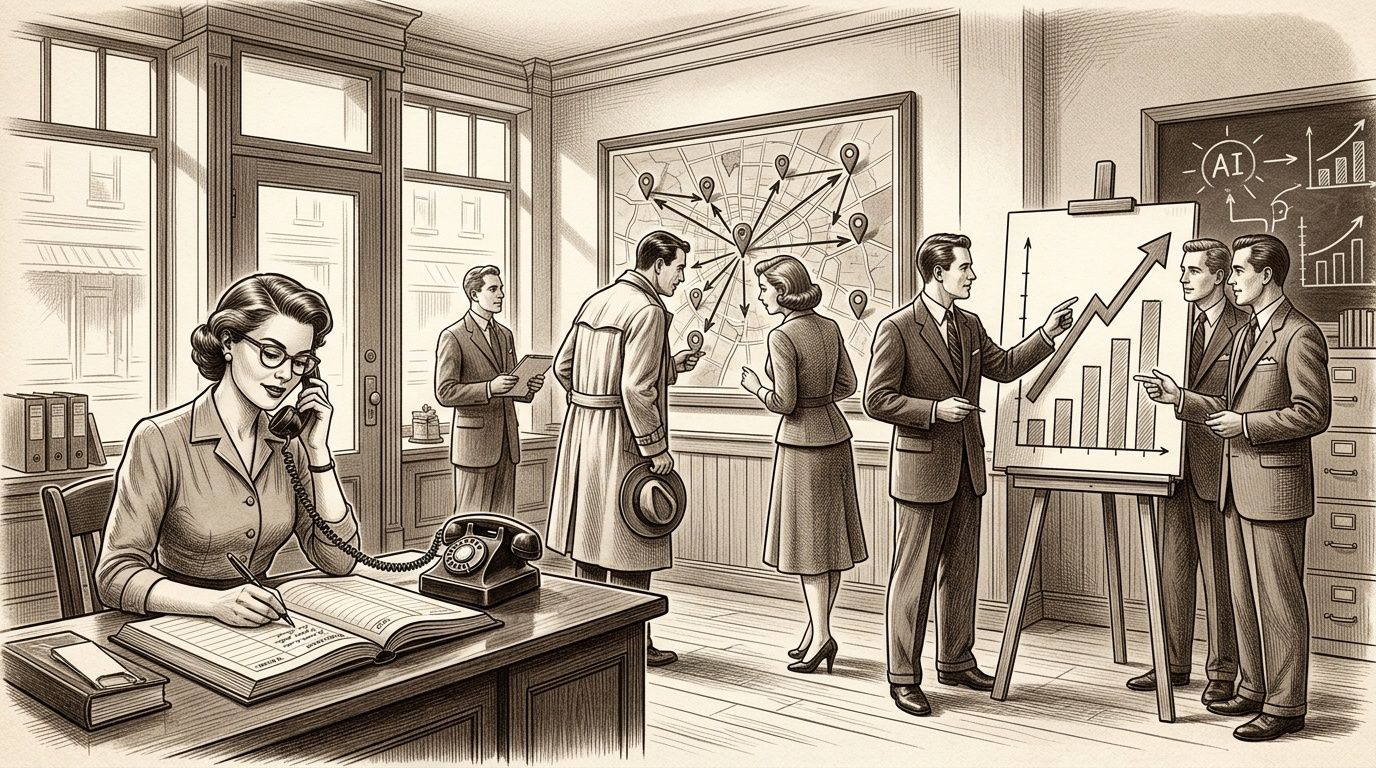
Academies, fitness centers, clinics, regional consultancies and other local services face a particular kind of competition. They do not compete against the entire internet. They compete against nearby alternatives and against the impatience of a user who wants to solve something soon. In this archetype, proximity is not enough. It has to be perceived.
The strategic opportunity appears at the intersection of local intent and mobile experience. According to the analysis of underserved digital micro-segments in Chile, 68% of eCommerce uses Shopify or WooCommerce and 52% of mobile carts are abandoned due to poor UX among audiences aged 18 to 34, who represent 45% of online buyers. Although that data comes from the eCommerce environment, the reading transfers to digitalized local services. When the decision happens on mobile and close to a concrete need, any friction cuts the intent short.
Many local businesses still think of their online presence as an administrative extension. Hours, address, a form and little else. The market no longer works that way. Local search has become an interface for immediate decisions. If the experience does not respond to that logic, the company is left out even with good offline service.
This especially affects academies, gyms or professional centers where the first desired action is not always a purchase, but a booking, an inquiry or a visit. In those cases, digital clarity replaces part of the initial commercial work.
It is not a mass-market business. It is a business of nearby intent. That difference forces you to read the types of clients by context, not by profile alone.
A common example is the regional academy with a good offline reputation but low digital conversion. The problem is not necessarily its offering. It may lie in an experience that does not translate proximity into certainty. In local businesses, that translation is a market advantage.
Industrial companies tend to underestimate their digital front because they assume the real sale happens at trade shows, tenders, meetings or long-term commercial networks. That view is already insufficient. In manufacturing and distribution, the digital channel does not replace the commercial relationship, but it does determine who enters it with credibility.
This archetype has a particular complexity. The buyer is not a single person. It can involve procurement, operations, finance and technical leadership. That is why the company competes not just on visibility, but on its ability to organize information for different decision-makers at different moments.
The biggest risk here is confusing historical recurrence with guaranteed loyalty. According to the data cited on loyal B2B customers in Chile, these clients make up 19% of the eCommerce/B2B base and show retention rates of 82% on WooCommerce and Shopify platforms managed with continuous CRO, compared with a 55% regional average. The strategic reading is not that "industry can retain too." It goes deeper. Even in complex B2B relationships, a minority of clients concentrates value and responds positively when the digital experience keeps up.
That data corrects a widespread idea in industrial sectors. The commercial relationship is not enough on its own if the experience of information, follow-up and support does not match the complexity of the purchase.
Industrial buyers need to interpret technical competence before talking to sales. They do not expect ornamental marketing. They expect structure, clarity and signals of operational solidity.
In industrial B2B, the site does not replace the salesperson. It filters who reaches the salesperson with enough conviction to move forward.
A recognizable case is the technical distributor with a stable client base that loses new opportunities because its digital presence does not help validate capability. There the problem is not branding in the abstract. It is the commercial translation of technical knowledge.
A company enters an acceleration phase when the main problem stops being generating demand and becomes allocating capacity well. There are already signs of traction. What is not yet resolved is which part of the system deserves scale and which only appears to work while volume remains manageable.
That nuance completely changes the reading of this archetype within the types of business clients. Here we are not talking about end consumers, but about businesses that represent a different opportunity for profitable growth. A startup or scale-up does not buy optimization to "improve the site" in the abstract. It buys it to reduce the cost of learning, defend unit economics and prevent growth from hiding inefficiencies that later become expensive to fix.
The logic of value concentration remains useful, even without returning to the reference cited earlier in this article. In fast-growing companies, a minority of segments, channels, messages or journeys usually explains a disproportionate part of the result. The strategic decision is not to test more fronts at the same time. It is to detect early which core generates repeatable return and to build expansion around that core.
In this type of company, the risk is not only in growing less than expected. It is in growing on a misread foundation. A channel may look efficient because it has not yet absorbed enough volume. A segment may convert well but destroy margin through support, discounts or churn. A funnel may perform, but only for users with an intent the company does not yet know how to replicate.
That is why optimization works here as a discipline of capital allocation. It orders product, acquisition and conversion decisions under a common criterion: which part of the system produces defensible growth and which only produces activity.
One pattern repeats frequently. The company interprets partial growth as total validation and expands before understanding which variable was sustaining performance.
A scale-up stalls when it confuses localized traction with a scalable model.
That is the strategic backdrop of understanding what CRO is and why it operates as a prioritization system. In an accelerating company, its value lies not in isolated visual tweaks. It lies in deciding, with evidence, which part of growth deserves more investment and which must be corrected before gaining more volume.
Segment🔄 Implementation complexity⚡ Resource requirements📊 Expected results💡 Ideal use cases⭐ Key advantagesFashion eCommerce and Online RetailMedium (A/B testing, mobile and checkout optimization)Medium-high (photography, frontend, analytics)Significant conversion increase (25–150% possible)High-traffic Shopify/WooCommerce stores with cart abandonmentFast ROI at checkout, plenty of data for segmentation ⭐⭐⭐B2B Software and SaaS CompaniesHigh (CRM, lead scoring, workflows)High (technical content, automation, sales)Qualified leads and high LTV; low initial conversionLanding pages by role/industry, demos and ROI calculatorsHigh LTV and upsell potential; excellent for nurturing ⭐⭐⭐⭐Electronics and Technology eCommerceMedium-high (technical SEO, product comparisons)Medium-high (inventory, technical content, reviews)Qualified traffic and SEO improvement; solid incremental conversionPC/gaming stores, accessories with model-based searchesHigher margins, customer loyalty and strong technical SEO ⭐⭐⭐Professional Services AgenciesMedium (authority positioning, social proof)Medium (expertise, case-study production, webinars)Increase in qualified inquiries/matches; long sales cycleMarketing, consulting, legal seeking high-value leadsHigh margins, local SEO and effective referrals ⭐⭐⭐Online Stores for Food, Beverages and Natural ProductsMedium (compliance, product education, subscriptions)Medium-high (logistics, certifications, content)Increase in recurrence and LTV through subscriptionsSupplements, organic DTC focused on retentionHigh potential for repeat purchase and a loyal community ⭐⭐⭐Local and Professional Services BusinessesLow-medium (GMB, local landing pages, bookings)Low (local optimization, GMB, minimal forms)Fast improvement in local leads and visibility within weeksGyms, academies, clinics; "near me" searchesHigh-impact GEO-SEO and fast results at low cost ⭐⭐⭐B2B Manufacturing and Industrial Distribution CompaniesVery high (deep technical content, complex sales)High (whitepapers, webinars, sales team)Few leads but very high value; 6–18 month cyclesMachinery suppliers, industrial componentsVery high LTV and contracts; strong loyalty ⭐⭐⭐⭐Companies in a Rapid-Growth Phase (Startups/Scale-ups)High (fast iteration, rigorous measurement)Medium (analytics, tests, automation)Fast impact on KPIs (CAC, MRR, conversion) if prioritized wellSaaS, marketplaces and apps that need to scale fastWillingness to experiment and replicate wins; high-impact cases ⭐⭐⭐⭐
Recognizing your business archetype changes the quality of decisions. Not because it provides an elegant label, but because it clarifies where the value lies, where the friction appears and which part of the digital system deserves executive attention. That is the difference between talking about types of clients as a commercial taxonomy and using them as a strategy tool.
The central point of this analysis is simple. Not all companies should grow the same way, even when they share channels, platforms or audiences. A fashion eCommerce depends on capturing impulse quickly. A B2B SaaS depends on building progressive conviction. A professional firm needs to translate expertise into trust. An industrial company has to make its technical solidity legible to several decision-makers. A scale-up must detect which minimal part of its system is explaining most of the result.
That approach matters most in contexts where value is concentrated. When a small share of customers explains a disproportionate part of revenue, or when a fraction of the funnel determines much of performance, growing is not about doing more. It is about allocating better. That forces you to abandon the idea that all frictions are equivalent. They are not. Some affect perception. Others stall the decision. Others destroy repeat purchase. Others quietly erode trust.
It also changes how you interpret common symptoms. Low growth does not always mean a lack of demand. Sometimes it means the business is operating with the wrong reading model. It thinks like a retailer when its problem is loyalty. It thinks like an aspirational brand when its market demands technical validation. It thinks like a mass business when in reality it depends on a minority of high-value customers. That mismatch is costly because it distorts priorities, investment and expectations.
That is why the useful question for a leadership committee is not "what tactic should we try now." The question is "what growth system does our business archetype need." That framing forces you to look at structure, not just actions. It forces you to distinguish between companies that must reduce purchase friction, companies that must raise clarity for decision-makers, companies that must protect a loyal base and companies that must make the traffic they already have more profitable.
In practice, correctly identifying your archetype helps resolve four critical decisions. Where to concentrate investment. Which type of demand to protect first. Which trust signals are truly decisive in your category. And which indicators deserve leadership tracking because they reveal sustainable growth, not just digital activity.
Bigbuda can be a relevant option in that kind of strategic conversation. The firm has operated since 2010, is based in Santiago, Chile, with a presence in Toronto, and works on digital growth by combining UX, data, continuous experimentation and artificial intelligence. It also holds more than 260 verified reviews and a 5.0 rating on Google, according to information provided by the brand itself.
Your next move should not be an isolated tweak. It should be a decision about the growth system that best fits the economic reality of your business. When that decision is made well, types of clients stop being a descriptive category and become a competitive advantage.
If your company needs a strategic reading of digital growth, Bigbuda can help assess where your greatest opportunity for conversion, retention and profitability lies today, based on your business model.
Because not all companies should grow the same way, even when they share channels, platforms or audiences. The archetype clarifies where the value lies, where friction appears and which part of the digital system deserves executive attention. That is what turns a commercial taxonomy into a real strategy tool.
Not a lack of interest, but the distance between intent and close. The category depends on quick, context-sensitive decisions, carries high exposure to abandonment, leans on visual presentation and works within a short conversion window. Treating all traffic as rational cools demand the store already paid to attract.
Because they read their clients as audience segments rather than decision-making roles. A functional evaluator wants evidence, an internal sponsor needs a case to defend, a technical reviewer prioritizes integration and security, and a financial approver measures return and risk. One generic story weakens all four.
Structure, clarity and signals of operational solidity rather than ornamental marketing. Several stakeholders take part in the decision, technical specificity organizes rather than scares buyers off, and trust is built through consistency between product, documentation, timelines and support. The site filters who reaches sales with real conviction.
Their economics depend on repetition rather than isolated conversions. Credibility around origin, ingredients, safety and consistency determines whether the customer returns, and education reduces commercial volatility. Two stores with similar order volume can have very different economic profiles depending on how much repurchase they achieve.
The part of the system that produces defensible growth. Speed amplifies both correct decisions and inefficiencies, and value concentration is often hidden at first, rarely in the most visible channel. Optimization works here as capital allocation: detect early which core generates repeatable return, then build expansion around it.