










Solutions
Explore how to grow

TL;DR: An effective web positioning service is no longer defined by rankings or traffic volume. It is defined by its ability to attract qualified demand, win visibility on Google and AI answer engines, capture local intent, and convert that attention into leads, sales, and ROI. The statistics cited earlier confirm the weight of the organic channel and the impact of climbing positions on CTR. The practical conclusion is simple: continuing to buy SEO without AEO, GEO, and a conversion strategy means continuing to pay for incomplete visibility.
The right approach combines technical optimization, useful content, intent-oriented architecture, geographic presence, and readiness for environments like ChatGPT. That is today's standard.
If your company still evaluates an agency by "ranked keywords," you are using an old criterion. A useful service is measured by qualified traffic, leads, and profitability. Everything else is reporting.
An effective web positioning service is not a list of technical tasks. It is a growth system.
The difference matters. A tactical provider fixes metadata, proposes keywords, and delivers reports. A strategic partner connects visibility with demand, authority, and commercial results.
An effective web positioning service is a comprehensive strategy that improves a company's presence on traditional search engines and answer engines, with a focus on attracting the right customer and transforming that visibility into measurable business opportunities.
That completely changes the conversation at the board and management level.
It is no longer just about "showing up on Google." It is about properly answering three questions:
Think of it as the difference between buying a vehicle and designing a logistics network. The first moves something. The second moves the business.
Effective web positioning services combine several layers:
Practical rule: if an SEO service cannot explain how it connects rankings with pipeline, it is not solving a business problem. It is executing tasks.
Do not look only at positions. Look at whether the strategy improves variables that matter to leadership.
| What many companies look at | What really matters |
|---|---|
| Isolated ranking | Visibility in searches with commercial intent |
| Raw traffic | Qualified traffic |
| Monthly report | Trend of leads and opportunities |
| More sessions | Better return from the organic channel |
When a company understands this, it stops buying SEO as an operating expense. It starts treating it as an investment in acquisition and digital defensibility.
Continuing to buy traditional SEO in 2026 means paying for an incomplete version of the channel.
The old recipe worked in a simpler environment. It was enough to optimize pages, work a few keywords, and wait. That model fell short because search no longer happens only in the classic organic results. Your brand competes on Google, in maps, in AI-generated answers, and in queries with immediate geographic intent.

Organic search still drives online customer acquisition, brand demand, and profitability. What changed was how that value is captured. A service focused only on on-page ranking leaves out a growing share of impressions, answers, and conversions.
That is the point many boards and management teams still have not corrected. They evaluate SEO as a task list. The market already demands a visibility system that covers discovery, answer, and local relevance.
Traditional SEO fails because it assumes a linear journey. The user searches, clicks, browses, and converts. Today the journey has fragmented.
Part of the demand is resolved without a click. Another starts with questions in assistants and answer engines. Another depends on local context, proximity, and proof of authority in a specific city or area. If your provider does not work those three layers, you are leaving demand uncaptured.
The consequence for the online business is direct:
Companies that understand this stop asking for "more content" and start demanding a visibility architecture. That includes classic SEO, optimization for answer engines, and a geo-targeted strategy. If you need context on that new layer, review this guide on AEO for answer engines.
Competing for profitable positions still matters. But it is no longer enough as the sole executive objective. Today a brand can appear, be compared, and be left out of the decision before receiving a click.
That is why it is worth changing the evaluation criterion. The goal is to capture demand with real intent at every point where the user discovers, validates, and chooses. Indexing, raw traffic, or task reports do not explain that result.
A modern positioning strategy must clearly answer three business questions. In which queries we appear. In which environments we are cited or recommended. How much of that visibility ends up in commercial opportunities.
Any service that operates without that logic delivers partial SEO. And partial SEO already competes poorly, converts worse, and produces less ROI.
Professional web positioning works when several pieces reinforce each other. If one fails, overall performance drops.
There are no sustainable shortcuts. There is architecture, authority, and clarity.
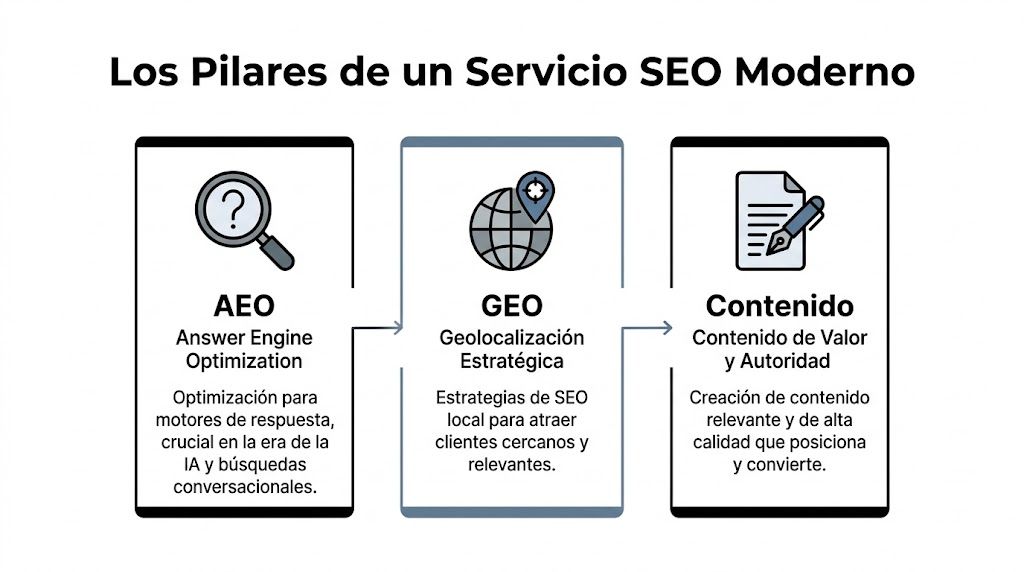
In Chile, the technical layer is not optional. Pages with an LCP under 2.5 seconds achieve 25% more organic impressions in local searches. In addition, strategic link building focused on .cl domains can increase rankings for high-conversion keywords by 35% (Arimetrics).
This has direct implications for leadership:
A slow, confusing site that is weak in local authority does not just lose ranking. It also loses algorithmic credibility.
Content stopped being editorial filler. Today it fulfills three functions at once:
That is why useful content is not written just to "stuff keywords." It is structured to answer real questions, cover comparisons, explain buying decisions, and make the brand's capabilities clear.
If you want to go deeper into how this logic adapts to answer engines, it is worth reviewing this approach to AEO for answer engines.
Executive criterion: the right content does not just bring visits. It reduces commercial friction before the sales team gets involved.
AEO means optimizing for engines that answer. GEO means strategically optimizing geographic relevance. Both layers are part of SEO with AI.
That changes the definition of digital presence. Your company no longer competes only for a click. It competes to be the chosen answer.
| Pillar | Business function | Risk of ignoring it |
|---|---|---|
| Technical SEO | Enables crawling, speed, and site comprehension | Lower visibility and worse experience |
| Strategic content | Captures intent and demonstrates authority | Irrelevant traffic or low trust |
| Qualified link building | Reinforces topical and local reputation | Low competitiveness on valuable terms |
| AEO | Improves presence in AI answers | Absence from new search interfaces |
| GEO | Captures demand with local intent | Loss of nearby leads and Maps searches |
Many companies have loose pieces. A blog, some technical improvements, local listings, maybe a few links. That does not amount to a strategy.
Effective web positioning services integrate those layers under a single logic: profitable visibility. That is where SEO stops being an isolated channel and becomes growth infrastructure.
A professional agency is recognized quickly. It defines what it will deliver, on what timeline, how it prioritizes, and what impact it expects to generate on leads, sales, or commercial efficiency.
If that does not appear from the proposal onward, you are not evaluating an investment. You are buying activity.
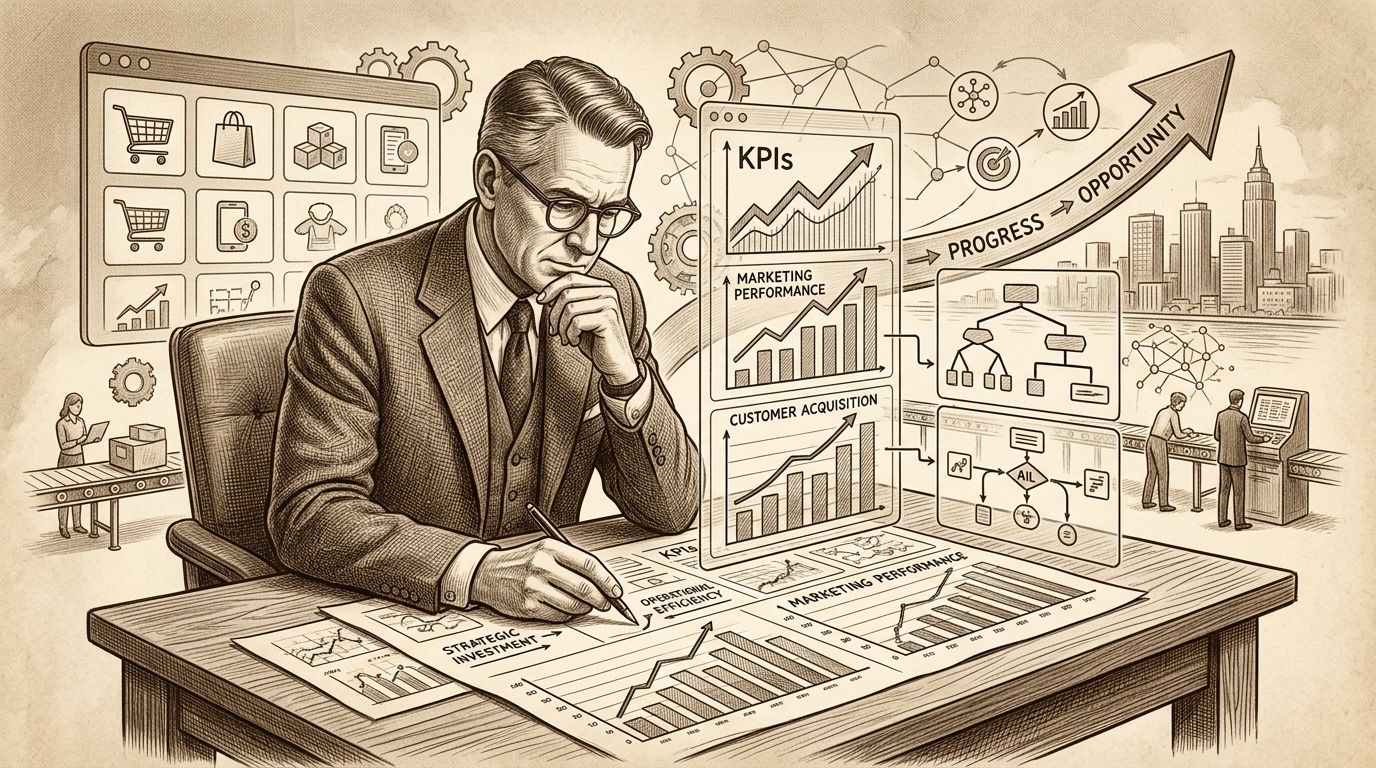
A serious professional web positioning service delivers operational pieces and executive judgment. Both.
Expect, at minimum, the following:
Also ask for an executive view of the channel. A well-built panel in a Looker Studio Pro executive dashboard lets you review trends, attribution, and performance without depending on scattered screenshots or late reports.
Rankings matter. The problem appears when they are reported as if they were the final result.
A CEO needs to see whether the visibility gained is capturing profitable demand. That is the correct reading of the channel.
Look at these indicators:
| Useful KPI | What it tells the CEO |
|---|---|
| Qualified organic leads | Whether the channel attracts opportunities with real closing potential |
| Organic conversion by page type | Which content and landing pages generate business |
| Share of visibility on strategic topics | How present the brand is in the searches that move the category |
| Performance by location or intent | Whether GEO is capturing local demand with commercial value |
| Presence in AI answers | Whether AEO is giving visibility in interfaces that already influence the decision |
| Revenue or pipeline influenced by organic | Whether SEO is contributing return, not just sessions |
That combination avoids a common mistake. Celebrating irrelevant traffic while the sales team keeps saying the leads are no good.
A good report also explains deviations. If CTR drops, if a page loses traction, if a city stops converting, or if a piece fails to gain presence in AI-powered search, you need a diagnosis, a probable cause, and a recommended decision. Not a pretty table.
It is worth watching an external explanation of how to better measure organic performance before reviewing any proposal.
Rule out providers that work like this:
That is not professional management. It is the production of noise with the appearance of method.
Most companies do not choose an SEO agency. They buy hours, reports, and promises. That mistake is expensive.
A serious provider must demonstrate how it converts visibility into pipeline, sales, and reduced dependence on paid media. If it does not integrate SEO, AEO, and GEO into a single system, you are evaluating an old service with a new name.
Before signing, check whether the provider operates with business judgment and not just production tasks.
Do not evaluate only the proposal. Evaluate the quality of their answers.
| Question | What you should hear |
|---|---|
| How do you define success in this project? | An answer connected to visibility, conversion, pipeline, and ROI |
| How do you incorporate AI into the strategy? | A clear method for AEO, content structure, entities, and presence in AI-generated answers |
| How do you prioritize opportunities? | Business criteria, difficulty, intent, and probability of commercial impact |
| What do you do with existing content? | Improvement, consolidation, pruning, and relaunch. Not just new production |
| How do you work geographic demand? | Coverage by city, local intent, regional authority, and operational consistency |
| What do you optimize after winning positions? | Conversion, entry pages, traffic quality, and performance by segment |
A good agency answers with decisions. A weak agency answers with jargon.
Bad decisions usually come wrapped in a flawless proposal. The problem appears months later, when there is traffic but no business.
Avoid providers that depend on:
Use this checklist as a board-level filter. It will save you budget, political time, and opportunity cost.
Many strategies stop right where the real problem begins. They generate traffic and consider the job done.
We work differently. We start with visibility, but we do not end there.
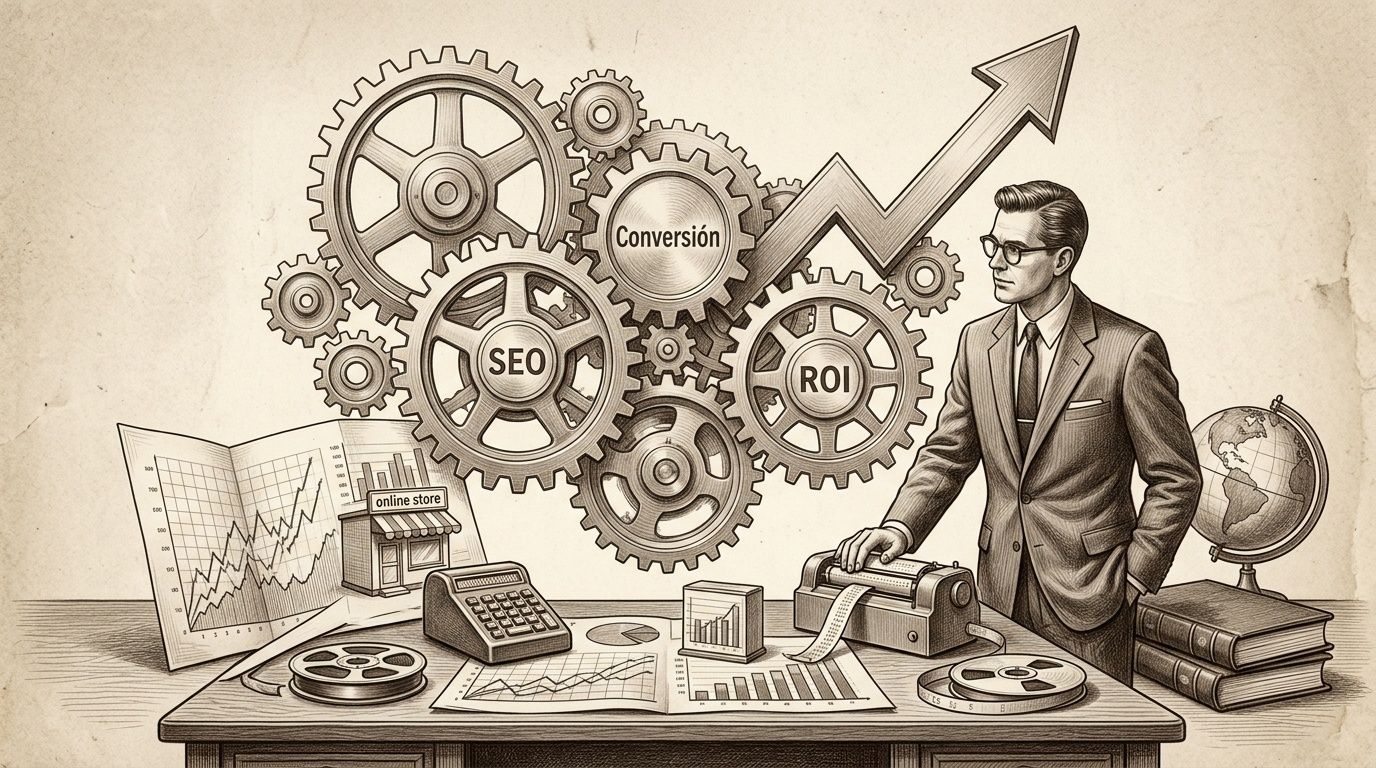
In Chile, it is estimated that 70% of sites with high organic traffic convert less than 2%. That is the gap closed by integrating SEO with CRO, transforming earned traffic into real sales and reducing dependence on paid advertising (Nexora).
That is why our logic combines three layers:
We do not think of the site as a set of URLs. We treat it as a commercial asset.
When we detect an organic opportunity, we also evaluate its ability to generate business. If a category attracts useful searches but does not convert, the problem is no longer one of positioning. It is one of friction, clarity, or poorly aligned intent.
To understand that second layer, many companies need to familiarize themselves with the framework of what CRO is, because that is where a large part of the channel's real return is defined.
More traffic without an improvement in conversion is not always growth. Sometimes it just amplifies inefficiencies.
This approach has special value in eCommerce and B2B businesses with more complex decision cycles.
In both cases, positioning on Google + AI works better when there is consistency between discovery, message, and experience. That is where a methodology based on data, content, and continuous optimization stops being a desirable improvement and becomes a durable competitive advantage.
It includes a visibility strategy, technical diagnosis, content structure, topical authority, local SEO when applicable, and adaptation to answer environments such as ChatGPT, Gemini, or Perplexity.
An effective web positioning service must also include ongoing monitoring and decisions. It is not a one-time implementation.
It depends on the starting point, the competition, and the quality of the site. The serious answer is not an exact date, but a roadmap with early signals and progressive goals.
If someone promises fast results without reviewing your context, they are selling expectations, not strategy.
SEO seeks to improve visibility in search engines. AEO optimizes presence in answer engines and conversational queries. GEO works on geographic relevance to capture local demand.
The three layers coexist. Separating them today is a bad decision.
To know whether it works, you should look at four things:
Yes. Paid media buys immediate exposure. SEO builds an asset that reduces future dependence.
They do not compete with each other. But a company too dependent on paid media is more exposed to cost inflation and lower marginal efficiency.
Because a significant share of demand has geographic intent. In Santiago, 60% of searches have local intent, and sites in Chile with an optimized GEO-SEO strategy see an increase of up to 40% in qualified organic leads (Emprendedores).
That is not solved with keywords alone. It requires local signals, consistent presence, and useful content for that intent.
Yes. Users are already consulting AI tools to discover brands, compare options, and summarize decisions.
If your company does not structure its information for those environments, it leaves room for others to define the category for you.
No. A redesign can help or hurt.
If the project does not consider architecture, content, crawlability, authority, and visibility continuity, a visually better site can perform worse than the previous one.
If your company needs a strategy that combines positioning on Google + AI, local visibility, and a focus on profitability, review how Bigbuda works in its web positioning service. The difference is not in publishing more. It is in turning visibility into sustainable growth.
Related reading: Voice Search Strategies for Companies in Chile · Your digital marketing consulting to grow in 2026
Related article: SEO and SEM Marketing: The Unified Strategy to Grow