










Solutions
Explore how to grow
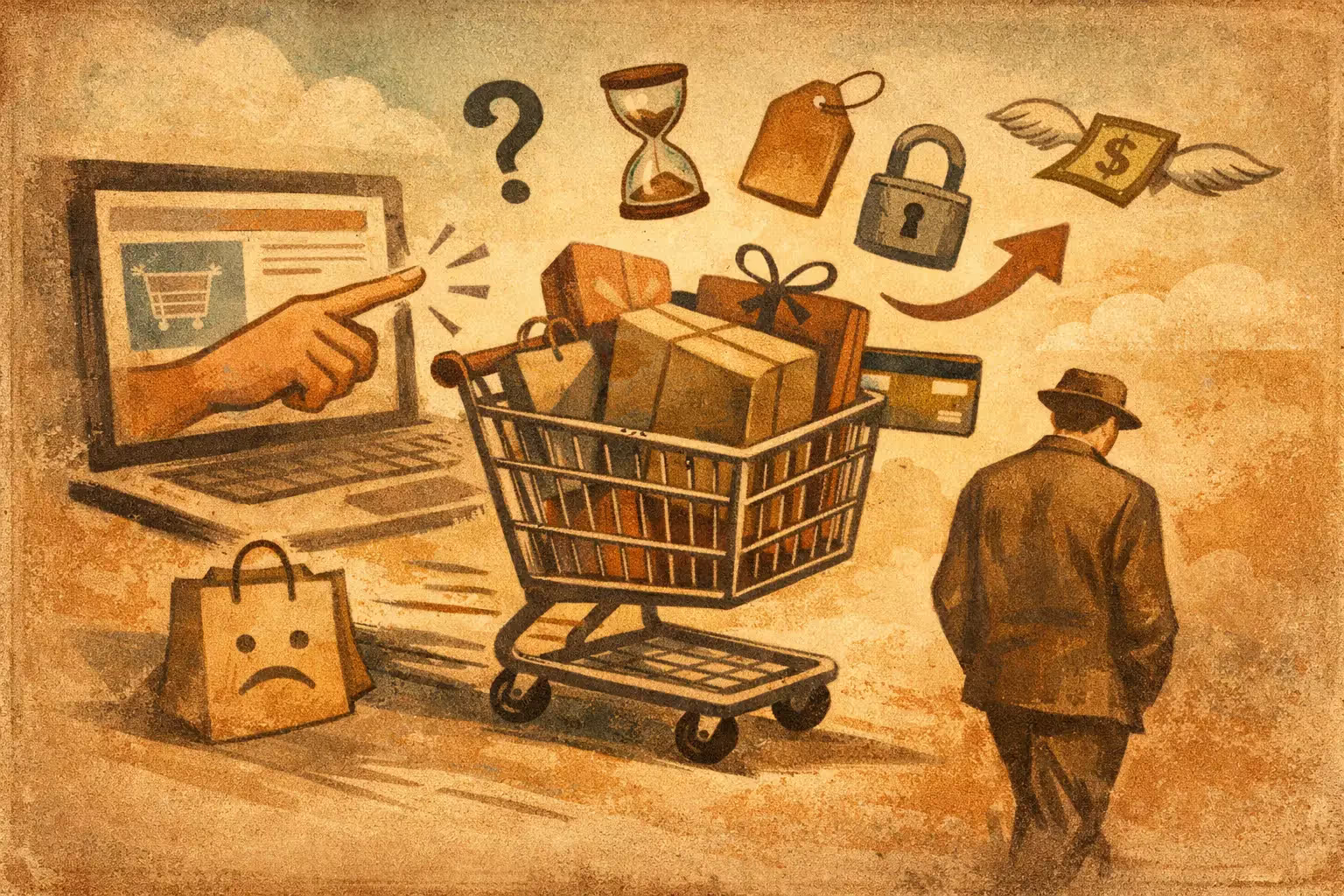
An abandoned cart isn't just a lost sale. It's a concrete signal that your ecommerce store generated intent but failed at the final stretch. And that stretch is the most expensive to recover, because you already paid for the traffic, the campaign, the visit and the user's attention.
Need help with this? Discover our conversion rate optimization (CRO).
At Bigbuda we help you reduce abandonment with ecommerce CRO.
If you're looking into how to reduce cart abandonment, the answer rarely lies in a single tactic. It isn't fixed with just a discount or an automated email. It's solved when the purchase process eliminates friction, conveys trust and gives the user clear reasons to complete the purchase now.
In most ecommerce stores, abandonment doesn't happen because the product is bad. It happens because a doubt appears right before paying. Sometimes it's the shipping cost. Other times, a long form, a slow load on mobile or a checkout that forces account creation.
There's also a less visible point: many teams measure abandonment as a remarketing problem, when it's really an experience and conversion problem. If the site forces the user to think too much, compare too much or complete unnecessary steps, the cart turns into a pause. And that pause usually ends in an exit.
Lowering abandonment requires reviewing the entire process, from the product page to payment confirmation. The best result comes when each stage reduces anxiety and speeds up the decision.
One of the most expensive mistakes is hiding costs until checkout. If the user sees an attractive price on the product but discovers shipping, taxes or surcharges at the end, the feeling isn't a pleasant surprise. It's friction.
Transparency sells more than a low price poorly presented. If you can show shipping ranges before the cart, estimated dates and free-shipping thresholds, you reduce one of the main causes of abandonment. Not every industry can absorb that cost, but they can all communicate it better.
Every additional field is an opportunity to leak conversions. Asking for tax ID, company, secondary address, reference, landline and mandatory account creation doesn't improve conversion. It complicates it.
A good checkout asks only for what's essential to ship and charge. If your operation needs extra data, consider requesting it after the purchase or only when it really applies. On mobile this matters even more, because typing from a phone has a much higher attention cost.
Requiring account creation before paying is still one of the most avoidable barriers. The user came to buy, not to commit to a long-term relationship. If you demand registration, many postpone the purchase intending to come back. Most don't come back.
The recommended approach is to offer guest checkout and leave account creation as a later benefit. For example, when finalizing the order you can invite the customer to activate their account with one click, using the purchase they've already made.
In ecommerce, especially with medium or high tickets, trust matters as much as the offer. The problem is that many brands try to convey it with generic messages instead of real signals.
Payment badges, well-known payment methods, clear exchange policies and visible delivery times all help, but only if they're in the right place. Having that information hidden in the footer adds little when the user is deciding whether to pay.
Trust should appear on the product, cart and checkout. If you sell to markets where online distrust is still a strong barrier, this point has even more impact. Saying "secure purchase" isn't enough. You have to prove it with recognizable payment methods, visible contact details and commercial rules that are easy to understand.
Small pieces of text can sustain conversion at critical moments. A "shipping estimated within 24 to 48 hours", "you can pay as a guest" or "returns within 30 days" resolves objections before they escalate.
This isn't decorative copywriting. It's CRO. The best ecommerce stores use microcopy to answer doubts without interrupting the flow. When those messages are missing, the user leaves to look for confirmation outside the site. And every exit is a potential leak.
Many teams still treat site performance as a matter for the technical area. But if your checkout is slow, glitchy or feels unstable on a phone, you're losing direct sales.
In many ecommerce stores in Chile and Latin America, more than 70% of traffic comes from mobile. Yet it's still common to see checkouts designed for desktop, with small buttons, awkward forms and steps that force you to zoom in.
If you want to understand how to reduce cart abandonment, review the mobile version first. That's usually where the biggest leak points appear. A poorly placed button, a keyboard that covers the active field or a confusing validation can destroy purchase intent in seconds.
You don't need the whole site to be perfect to earn more. But you do need the product page, the cart and the checkout to load quickly. They're the pages with a direct impact on revenue.
When a page is slow, the user doesn't always wait. Especially if they come from paid campaigns, marketplaces or comparison sites, tolerance is low. Reducing unnecessary scripts, optimizing images and controlling apps or plugins that overload the process usually has a tangible impact on conversion.
Not all abandonment is technical friction. Sometimes the user simply can't close the decision because the site doesn't help them.
There are carts that look like secondary showcases. Full of banners, popups, intrusive recommendations and promotions that compete with the current purchase. That doesn't always increase the order value. Sometimes it cools it down.
The cart should serve a simple function: validate the selection, resolve doubts and lead to payment. Cross-selling can work, but it depends on the context. If it interrupts too much or adds noise, it raises abandonment. The key is to test with data, not to assume that more offers mean more revenue.
Recovery emails, automated reminders and remarketing audiences are still useful. They can rescue part of the lost sales and improve the return on the traffic you've already captured.
But there's an important strategic difference: recovering abandonment doesn't replace fixing its causes. If your abandonment rate is high because of UX, speed or trust problems, insisting with automations only offsets part of the damage. First fix the leak. Then accelerate recovery.
Many ecommerce stores look only at the overall conversion rate and the abandonment percentage. That gives context, but it doesn't tell you where the process breaks. To make useful decisions, you need to observe the funnel stage by stage.
Review how many users add to cart, how many start checkout, how many reach payment and how many finish. If the steepest drop happens at the start of checkout, there's probably form friction or unexpected costs. If the problem appears at payment, there may be distrust, technical errors or payment methods poorly suited to your audience.
It also pays to segment by device, traffic source and type of user. The behaviour of someone arriving from organic search isn't always the same as someone coming from a remarketing campaign. Without that reading, it's easy to make general changes that don't fix the real problem.
Reducing abandonment doesn't depend on "best practices" copied from another ecommerce store. It depends on identifying specific frictions and prioritizing changes with commercial impact. In some cases, the biggest advance will come from simplifying checkout. In others, from making shipping transparent or improving mobile speed. It always depends on the context, the ticket and the maturity level of the channel.
What matters is this: if your ecommerce store already generates purchase intent, you don't need to start from scratch. You need to capture the demand you're already paying for more effectively. That's the point where CRO stops being a cosmetic improvement and becomes real growth.
If your site attracts visits today but loses sales at the end of the process, there's room to improve without increasing your investment in traffic. A large part of digital profitability is decided there. Same traffic. Better results.
Related article: B2C ecommerce SEO that actually sells.
In most stores abandonment isn't about the product. A doubt appears right before paying: an unexpected shipping cost, a long form, a slow load on mobile, or a checkout that forces account creation. The cart becomes a pause, and that pause usually ends in an exit.
Before the cart, not at the end. Hiding costs until checkout turns an attractive price into friction. Show shipping ranges, estimated dates and free-shipping thresholds as early as you can. Not every industry can absorb that cost, but every industry can communicate it better.
Yes. Requiring registration before payment is one of the most avoidable barriers: the user came to buy, not to commit. Offer guest checkout and leave account creation as a later benefit. When the order is complete, invite the customer to activate their account with one click.
On the product page, the cart and the checkout, where the doubt appears. Payment badges, well-known payment methods, clear exchange policies and visible delivery times add little buried in the footer. Saying "secure purchase" isn't enough; prove it with recognizable payment methods, visible contact details and rules that are easy to understand.
In many ecommerce stores in Chile and Latin America, more than 70% of traffic comes from mobile, yet checkouts are still designed for desktop. Small buttons, awkward forms and steps that force zooming destroy purchase intent in seconds. Review the mobile version first: that's usually where the biggest leaks appear.
No. Recovery emails, automated reminders and remarketing can rescue part of the lost sales, but they don't replace fixing the causes. If your abandonment is high because of UX, speed or trust problems, automations only offset part of the damage. First fix the leak, then accelerate recovery.